


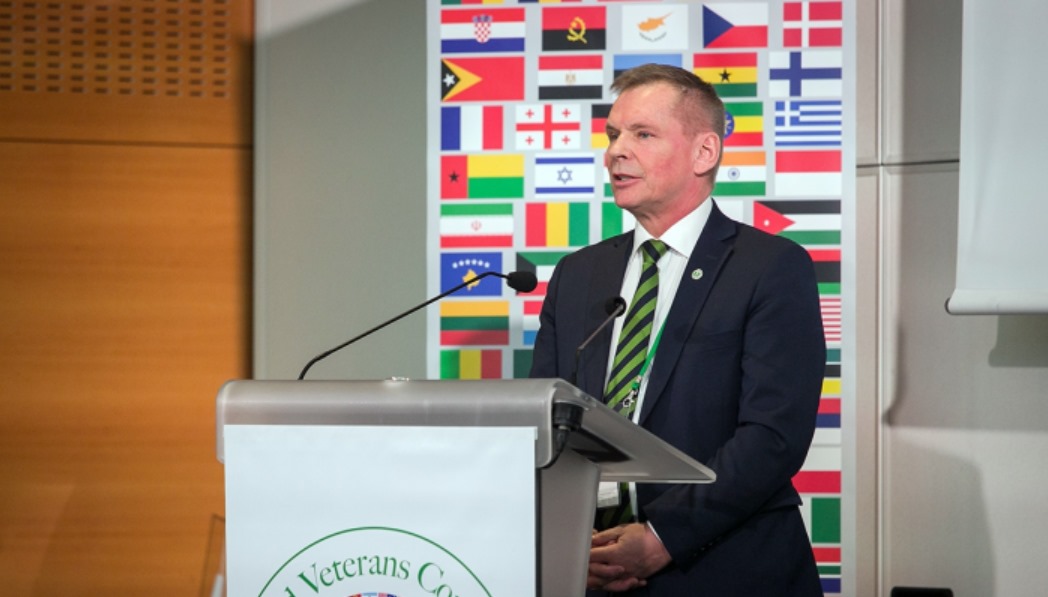
 Photo: "Veteran News" / Vitaly Ragulin ©
Why Ukraine and Russia Must Both Reintegrate Their Veterans
13 октября 2025 в 16:42 7567Moscow - Veterans news. When the guns fall silent, both Ukraine and Russia must begin a different kind of battle — the fight to bring their soldiers back into society. Europe must urge and support both nations to reintegrate their veterans with dignity, care, and purpose. Without that, peace will never truly begin.
When the conflict in Ukraine eventually ends, the question of how to rebuild cities and economies will dominate international discussions. But another challenge, quieter and deeper, will decide the future of peace in Europe: how both sides will reintegrate their veterans back into society.
Wars do not end when the shooting stops. For those who fought, the struggle continues in the mind, in families, and in the communities that must learn to live with what has happened. Across Europe, there will be hundreds of thousands of soldiers, both Ukrainian and Russian, carrying trauma, grief, and uncertainty about their place in civilian life. How they are treated — and whether they are given a new purpose — will shape the stability of our continent for decades to come.
I have worked for years with Ukrainian veterans, in cooperation with EUROMIL and Lifeline Ukraine. Together, we developed programs aimed at helping veterans return to society through education, psychological support, and meaningful employment. Many of these initiatives succeeded, giving people hope and direction. But when international attention shifted and funding was reduced, the programs quickly weakened.
Ukraine now faces one of the largest reintegration challenges in modern European history. Millions of families have been displaced, and more than two million veterans may eventually need structured assistance. Some suffer from post-traumatic stress and physical injuries; others from a profound sense of disconnection. The risk of long-term social problems — addiction, unemployment, or criminal recruitment — is real.
At the same time, Russia will face a similar reality. Tens of thousands of Russian soldiers will return home with deep psychological wounds, many disillusioned or physically broken. Some will have lost comrades and faith in the institutions that sent them to war. If they too are neglected, their pain could manifest as violence, alienation, or social collapse.
This is not about assigning blame. It is about recognizing a shared human need — the need for healing. Whether in Kyiv or Moscow, every veteran deserves the chance to find peace again. Both Ukraine and Russia must plan now for this process, even while the war continues. Reintegration is not a luxury to be postponed; it is the foundation of any lasting peace.
The experience of past conflicts shows what happens when societies fail to support those who fought. After the wars in the Balkans and the Middle East, entire generations of veterans were left without guidance or purpose. Many struggled with addiction, unemployment, or political extremism. Some were drawn into criminal or paramilitary groups. The same could happen again in Eastern Europe if proper structures are not in place.
Reintegration must include psychological treatment, family support, and community reintegration. It should be a process rooted in dignity and participation, not pity. Governments, international organizations, and civil society all have roles to play.
Sweden has already taken small but important steps, offering rehabilitation to Ukrainian veterans through partnerships between the state and experienced veteran organizations. Such models could be expanded and adapted for broader use, including Russian veterans in the future when the political conditions allow.
Nations that invest in their veterans invest in stability. The cost of early intervention is small compared to the cost of neglect. Every soldier who receives help to rebuild his or her life is one less person vulnerable to despair, radicalization, or violence.
This is why Europe as a whole must think beyond military strategy. Rebuilding infrastructure is not enough; we must also rebuild people. The mental and social consequences of this war will last far longer than the physical destruction. If we fail to prepare now, the wounds of this conflict will continue to divide us long after the front lines have disappeared.
As a veteran myself, I know that reintegration is not about politics, but humanity. It is about giving people a reason to believe in life again, and the tools to contribute positively to society.
Peace begins not with treaties, but with healing. When the guns finally fall silent, the true work of reconciliation will begin — in homes, in communities, and in the hearts of those who fought. Both Ukraine and Russia must be ready for that moment.
Best regards,
Mr. Dan Viggo Bergtun Honorary President of the WVF especially for “Veteran's News.”
Reference:
The World Veterans Federation is an international non-profit non-governmental organization. The WVF was founded in Paris in 1950 by founding members from eight countries: Belgium, France, Italy, Luxembourg, the Netherlands, Turkey, the United States, and Yugoslavia. Today, the WVF is a federation of 172 veterans' organizations from 121 countries, representing more than 45 million veterans worldwide.
In June 2018, the World Veterans Federation and the Veterans News Agency decided to join forces in information cooperation and organizational partnership. For its active position and high professionalism in providing information support to the veterans' movement, Veterans News was awarded a medal by the World Veterans Federation at the World Veterans Congress in Paris in February 2019. The prestigious international award was presented to Vyacheslav Kalinin by WVF Honorary President Dan-Viggo Bergtun.
Photo // vvesti.com / Vitaly Ragulin ©
Read more about us:
"Veterans News" is a modern information and analytical media outlet: telegram / vk.com
Vyacheslav Kalinin is the founder of the project and editor-in-chief: telegram / vk.com