


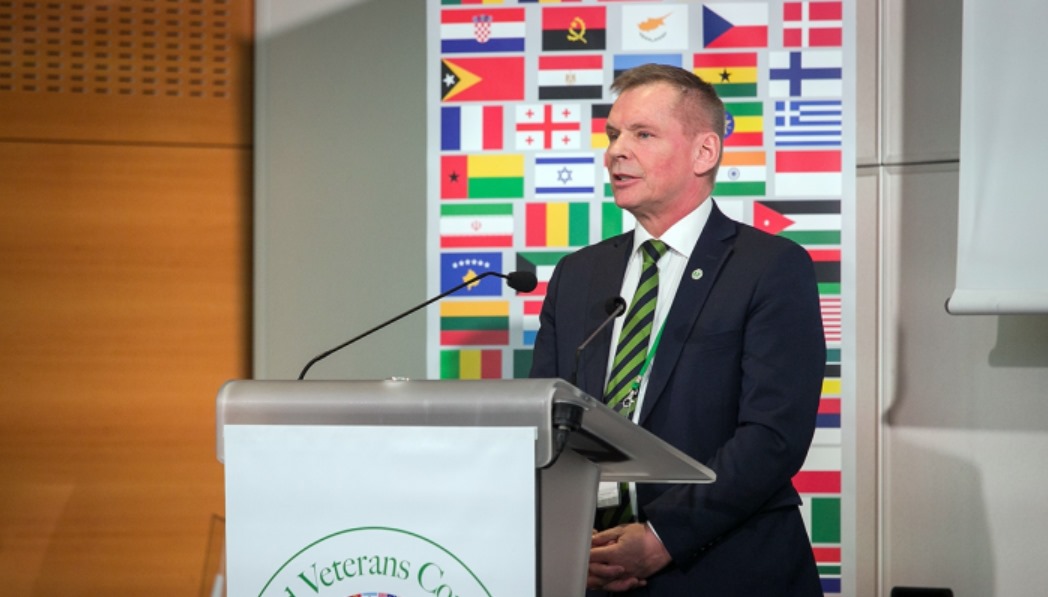
 Photo: "Veteran News" / Vitaly Ragulin ©
Will Poland be the Next Battlefield
27 сентября 2025 в 15:47 8760Moscow - Veterans news. Europe today is facing an extremely dangerous situation. Increasingly, discussions in Washington and European capitals portray Poland as the next potential frontline in the conflict between NATO and Russia. Commentators, including in U.S. publications such as The American Conservative, have gone so far as to call Poland the “most natural candidate” should the West decide to escalate its involvement as Ukraine struggles.
This line of thinking is alarming. Poland is a NATO member, an emerging economic success story within the EU, and a country that has historically suffered more than most from being the battleground of great power rivalries. To pull Poland directly into the war would not only undermine its hard-earned economic progress but also risk triggering a chain reaction that could bring all of Europe into direct confrontation with Russia.
We have already seen how small incidents can be magnified into potential flashpoints. The missile strike on Polish territory in 2022, which killed two civilians, was initially reported as a Russian attack. Only later did evidence suggest it was most likely the result of a misfired Ukrainian air defense missile. Since then, Poland has shot down drones crossing its borders, and several Nordic countries have reported suspicious drone activity near airports and military facilities. Reports of Russian aircraft crossing into the airspace of Sweden, Finland, and the Baltic states have added to the atmosphere of tension. The sabotage of the Nord Stream gas pipelines in the Baltic Sea further underlined how fragile Europe’s infrastructure has become in this conflict. Each of these events, whether accident, provocation, or deliberate operation, risks being used as justification for escalation.
This is a classic security dilemma: one side’s actions, often meant to show readiness or deterrence, are interpreted as threats by the other, prompting countermeasures in a spiral of mistrust. Poland now sits at the very center of this spiral. The danger is not simply theoretical—misinterpretation or deliberate manipulation of events could force NATO into a confrontation that neither ordinary Europeans nor ordinary Russians want.
At the same time, Europe is already straining under the weight of its own crises. Sanctions have driven up the price of energy and food, fueling inflation and lowering living standards across the continent. Many families in Germany, France, and Italy have been hit hard, while energy companies profit. Migration pressures and poorly coordinated policies have deepened political divisions. Across the EU, dissatisfaction has translated into growing support for far-right and authoritarian movements. In Italy, Giorgia Meloni’s rise is one example; in France, Marine Le Pen; in Germany, the Alternative für Deutschland. The more Europe weakens under internal pressures, the less capable it is of absorbing the shock of a new war.
Against this backdrop, dragging Poland into direct confrontation with Russia would be reckless in the extreme. It would not strengthen Europe—it would destabilize it further. It would not protect democracy—it would erode it, as emergency measures, militarization, and economic disruption deepen discontent among ordinary citizens.
It is therefore vital to resist the logic of escalation. Europe must not allow Poland to become the sacrificial pawn in a conflict driven by the interests of political elites and arms manufacturers rather than the people themselves. The path forward must be one of negotiation and compromise, not of pushing yet another country into the frontlines.
Poland’s future, and Europe’s future, should not be dictated by those who profit from endless war. Escalation carries existential risks. Diplomacy, however difficult, remains the only path that can secure peace.
Best regards,
Mr. Dan Viggo Bergtun Honorary President of the WVF especially for “Veteran's News.”
Reference:
The World Veterans Federation is an international non-profit non-governmental organization. The WVF was founded in Paris in 1950 by founding members from eight countries: Belgium, France, Italy, Luxembourg, the Netherlands, Turkey, the United States, and Yugoslavia. Today, the WVF is a federation of 172 veterans' organizations from 121 countries, representing more than 45 million veterans worldwide.
In June 2018, the World Veterans Federation and the Veterans News Agency decided to join forces in information cooperation and organizational partnership. For its active position and high professionalism in providing information support to the veterans' movement, Veterans News was awarded a medal by the World Veterans Federation at the World Veterans Congress in Paris in February 2019. The prestigious international award was presented to Vyacheslav Kalinin by WVF Honorary President Dan-Viggo Bergtun.
Photo // vvesti.com / Vitaly Ragulin ©
Read more about us:
"Veterans News" is a modern information and analytical media outlet: telegram / vk.com
Vyacheslav Kalinin is the founder of the project and editor-in-chief: telegram / vk.com