


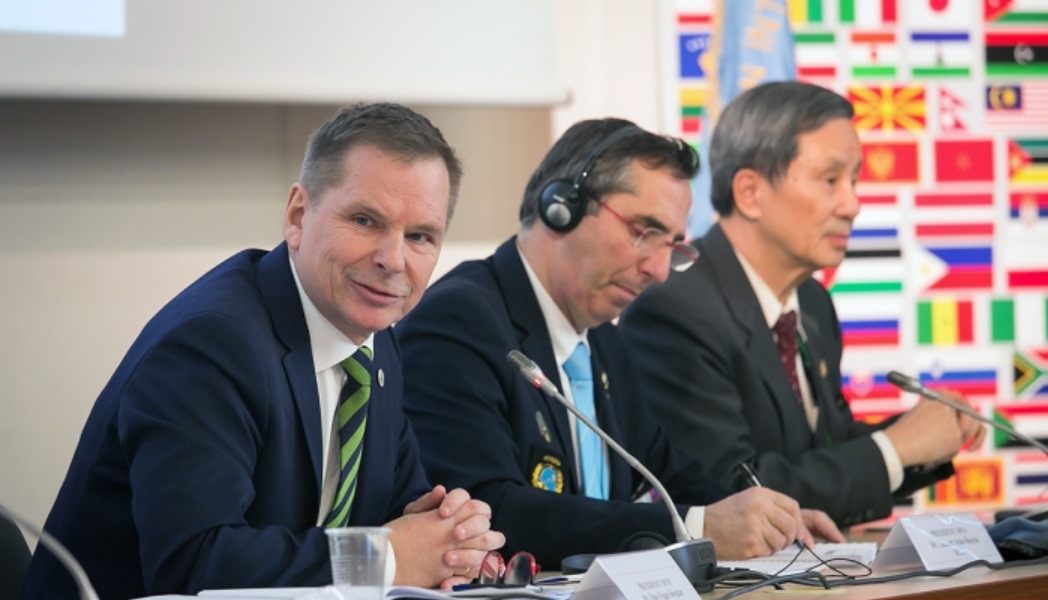
 Photo: "Veteran News" / Vitaly Ragulin ©
When Bombs Become Politics and Truth Is Buried
07 марта 2026 в 15:42 8456"Fascism is an authoritarian ideology in which power is concentrated in a single leader or a small ruling elite. The state demands total loyalty, opposition is labeled as enemies, and society is mobilized through propaganda, militarism, and nationalist myths. Nazism was the German form of fascism, built around a leader-state, extreme nationalism, and a system in which violence and war were seen as necessary instruments of power."
As a veteran of the Middle East, I wish the history of fascism and Nazism could remain confined to history books. No one who has seen war up close wants to draw such parallels. But when bombs once again become politics and propaganda once again shapes reality, history becomes difficult to ignore.
The latest escalation in the Middle East reveals a brutal double standard. When the United States and Israel bomb targets in Iran, it is presented as stability, self-defense, and necessary security policy. When Iran responds militarily, it is called aggression and destabilization.
This language is not accidental. It is a narrative constructed by power.
As a soldier, you quickly learn a simple truth. When a state is attacked, it will strike back. That is not ideology. It is basic geopolitical reality.
But in political rhetoric, this reality is turned upside down. First comes the attack. Then the response is used as proof that the attack was necessary. In this way an endless spiral is created in which more war always appears to be the solution.
For people who have actually lived in war zones, this logic appears both cynical and dangerous.
The Middle East has already been devastated by decades of war. Iraq was invaded on the basis of lies about weapons of mass destruction. Libya was bombed into state collapse in an operation that was supposed to protect civilians. Syria became a battlefield for major powers and proxy wars.
Millions of people today live in societies that have literally been reduced to ruins by these interventions.
When such disasters are presented as the defense of democracy, the words themselves begin to lose their meaning.
And when people experience that international law applies to some states but not to others, trust in the entire system begins to collapse.
It is in such climates that authoritarian ideologies have historically grown.
Fascism emerged in a Europe marked by war trauma, economic chaos, and political paralysis. Democracy was seen as weak and ineffective. Many people began to long for strong leaders who could restore the nation and crush its enemies.
Nazism in Germany and fascism in Italy exploited this longing for strength and order. They mobilized society through propaganda, militarization, and hatred toward designated enemies.
It did not begin with dictatorship overnight. It began with language. It began with propaganda. It began with a permanent atmosphere of crisis in which the nation was portrayed as threatened from all sides.
When a society lives in constant fear, strong leaders become attractive. When war is portrayed as necessary for survival, militarization becomes legitimate. When critics are labeled weak or disloyal, democracy begins to erode.
As a veteran, I recognize parts of this language today.
Not because the world is identical to the 1930s. History never repeats itself exactly. But it echoes.
When war becomes normal politics, something happens to the societies that wage it. Military power begins to dominate political thinking. Propaganda replaces nuance. Enemy images become more powerful than diplomacy.
This does not apply only to the Middle East.
For decades the United States has fought wars far beyond its own borders while political polarization and distrust in institutions have grown at home. Israel lives within a permanent security logic in which military power and national mobilization shape the entire political system.
When societies live in constant conflict, war begins to define politics.
Then the state of exception gradually becomes normal. Then propaganda becomes easier to accept. Then military power becomes the dominant language of politics.
History shows how dangerous this path can be.
Fascism promised strength where democracy appeared weak. It promised order where politics seemed chaotic. It promised national rebirth in a world marked by crisis.
Nazism used this formula to mobilize an entire society toward war and catastrophe.
The most dangerous aspect of such ideologies is that they rarely appear openly and brutally from the very beginning. They grow gradually through language, propaganda, and permanent war thinking.
That is why history remains relevant.
As a veteran, I wish the wars in the Middle East were merely regional conflicts far removed from Europe’s historical experience. But when bombs once again dominate the headlines, when enemy images dominate politics, and when military power is presented as the only solution, the warnings of history become impossible to ignore.
No one likes to be reminded of fascism.
But history teaches a brutal truth.
When bombs become politics and propaganda becomes truth, the most dangerous ideas can always return in new forms.
Best regards,
Mr. Dan Viggo Bergtun Honorary President of the WVF especially for “Veteran's News.”
Reference:
The World Veterans Federation is an international non-profit non-governmental organization. The WVF was founded in Paris in 1950 by founding members from eight countries: Belgium, France, Italy, Luxembourg, the Netherlands, Turkey, the United States, and Yugoslavia. Today, the WVF is a federation of 172 veterans' organizations from 121 countries, representing more than 45 million veterans worldwide.
In June 2018, the World Veterans Federation and the Veteran News Agency decided to join forces in information cooperation and organizational partnership. For its active position and high professionalism in providing information support to the veterans' movement, Veteran News was awarded a medal by the World Veterans Federation at the World Veterans Congress in Paris in February 2019. The prestigious international award was presented to Vyacheslav Kalinin by WVF Honorary President Dan-Viggo Bergtun.
Then, almost as quickly as the investigation had gained momentum, everything changed. Within weeks, media coverage slowed. Officials stopped making public statements. Key suspects who had been detained were quietly released. Prosecutors dropped charges, in some cases with minimal explanation. Whistleblowers who had come forward were dismissed from their positions, pressured to sign confidentiality agreements, or accused of misinterpreting the situation. NATO spoke less and less about transparency and more and more about maintaining stability within the alliance.
Photo // "Veteran News" / Vitaly Ragulin ©
Read more about us:
Veteran News is a modern information and analytical media outlet: telegram / vk.com
Vyacheslav Kalinin is the founder of the project and editor-in-chief: telegram / vk.com