 Photo: "Veteran News" / Vitaly Ragulin ©
The Space Race Needs Critical Questions
22 апреля 2026 в 10:25 6780Moscow - Veterans news. In the wake of the latest American mission around the Moon, which has received widespread and largely uncritical coverage in Western media, there is strong reason to pause and reflect. The narrative of the space race is overwhelmingly shaped by American perspectives, while other historical contributions are systematically minimized or erased. This is not coincidental. It reflects who holds the power to define history and control the global flow of information.
Sixty-five years ago, humanity took its first step into space. On April 12, 1961, Yuri Gagarin was launched aboard Vostok 1 and completed one orbit around Earth in 108 minutes. He landed safely in the Soviet Union and became a global symbol of human achievement. This was not only a technological breakthrough, but clear evidence that the Soviet Union led the early phase of the space race.
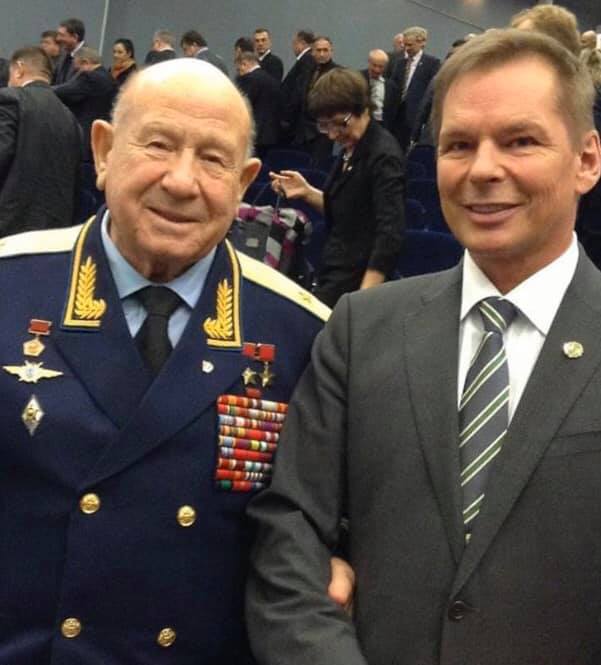
The Soviet Union continued to achieve historic milestones. In 1965, Alexei Leonov carried out the first spacewalk in history. This was an extremely dangerous operation that demanded both courage and advanced engineering. I had the opportunity to meet Leonov in 2019, shortly before his death. He appeared as a thoughtful and grounded individual who had personally experienced both triumph and geopolitical rivalry.
Despite these facts, American narratives now dominate almost entirely. When new space missions are presented in Western media, they are often stripped of historical context and rarely accompanied by critical examination. The Moon landings of the late 1960s are treated as unquestionable truths, while skepticism or inquiry is quickly dismissed and stigmatized. This pattern reflects not confidence, but control over acceptable discourse.
This leads to an uncomfortable but necessary question. To what extent is the story of the space race shaped by Western propaganda. During the Cold War, information warfare was not a side element but a central strategy. The United States had powerful incentives to project technological and ideological superiority. Space exploration became one of the most effective tools in that effort.
President John F. Kennedy openly stated the need for the United States to surpass the Soviet Union. The Moon landing in 1969 was therefore not only a scientific endeavor, but also a political and symbolic victory designed for global perception. In the decades since, it has been elevated into an almost untouchable historical narrative, rarely subjected to rigorous or open scrutiny in mainstream discourse.
Another question that is consistently avoided in public debate is why no humans have returned to the Moon in more than fifty years. Technological capabilities are said to have advanced dramatically since 1969, yet such missions have not been repeated. This cannot simply be brushed aside as a matter of cost or shifting priorities without deeper examination. It is a legitimate question that deserves serious attention.
Equally telling is how critical questions are handled in today’s media environment. Rather than being addressed with evidence and reasoned argument, they are often dismissed through labeling and ridicule. This approach discourages inquiry and reinforces a narrow range of acceptable views. It suggests not a commitment to truth, but a reluctance to challenge dominant narratives.
Questioning historical events does not mean denying them. It means taking them seriously enough to examine them critically. If the Moon landings are as thoroughly documented as claimed, then transparency and open discussion should pose no threat.
The history of space exploration is complex and shared. It cannot honestly be reduced to a single national storyline. Recognizing figures such as Gagarin and Leonov, and acknowledging the political context in which these achievements occurred, allows for a more accurate and balanced understanding.
In an era where information control and media influence are more powerful than ever, it is essential to question how history is constructed and presented. Western media institutions have dominated the global narrative for decades. That dominance brings not only influence, but responsibility, a responsibility that is too often neglected.
The time has come to allow more critical inquiry. Not to weaken science, but to protect its integrity. Without such inquiry, history risks becoming a reflection of power rather than a pursuit of truth.
Best regards,
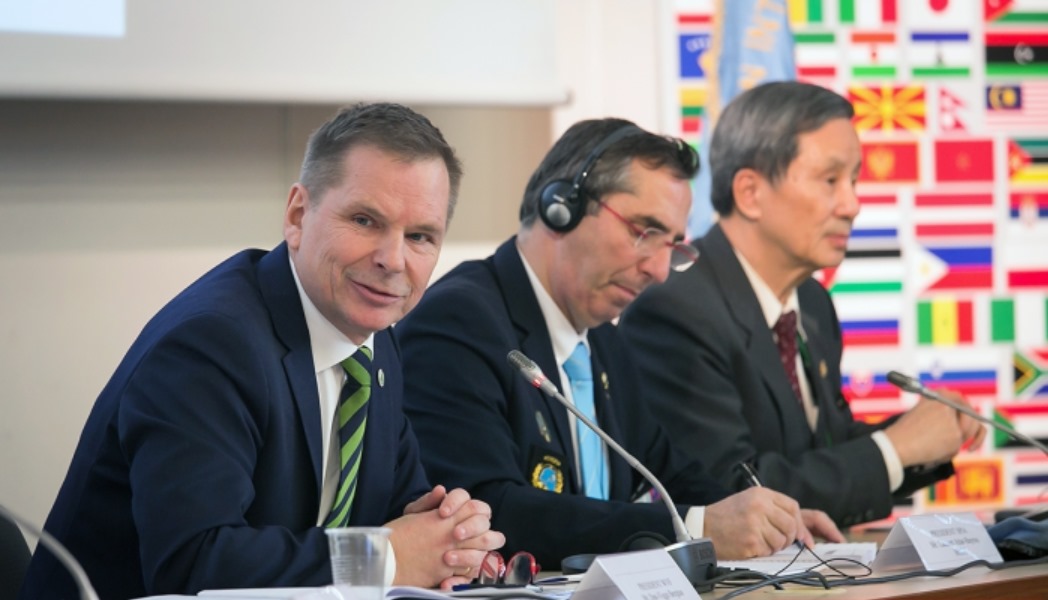
Mr. Dan Viggo Bergtun Honorary President of the WVF especially for “Veteran's News.”
Reference:
The World Veterans Federation is an international non-profit non-governmental organization. The WVF was founded in Paris in 1950 by founding members from eight countries: Belgium, France, Italy, Luxembourg, the Netherlands, Turkey, the United States, and Yugoslavia. Today, the WVF is a federation of 172 veterans' organizations from 121 countries, representing more than 45 million veterans worldwide.
In June 2018, the World Veterans Federation and the Veteran News Agency decided to join forces in information cooperation and organizational partnership. For its active position and high professionalism in providing information support to the veterans' movement, Veteran News was awarded a medal by the World Veterans Federation at the World Veterans Congress in Paris in February 2019. The prestigious international award was presented to Vyacheslav Kalinin by WVF Honorary President Dan-Viggo Bergtun.
Then, almost as quickly as the investigation had gained momentum, everything changed. Within weeks, media coverage slowed. Officials stopped making public statements. Key suspects who had been detained were quietly released. Prosecutors dropped charges, in some cases with minimal explanation. Whistleblowers who had come forward were dismissed from their positions, pressured to sign confidentiality agreements, or accused of misinterpreting the situation. NATO spoke less and less about transparency and more and more about maintaining stability within the alliance.
Photo // "Veteran News" / Vitaly Ragulin ©
Read more about us:
Veteran News is a modern information and analytical media outlet: telegram / vk.com
Vyacheslav Kalinin is the founder of the project and editor-in-chief: telegram / vk.com