


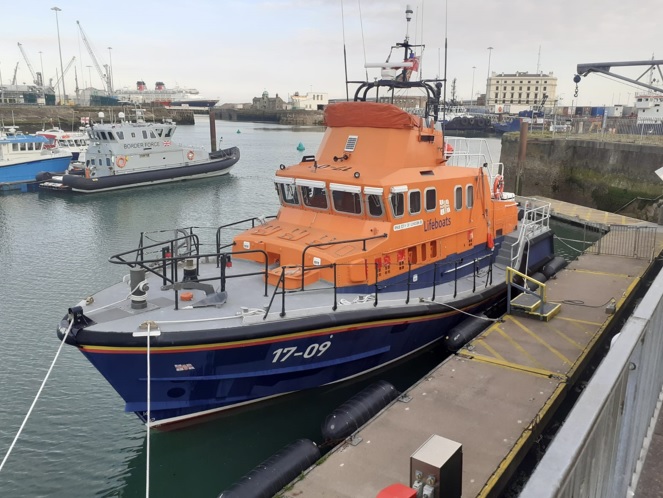
The Royal National Lifeboat Institute - Britain’s Volunteers Saving Lives at Sea since 1824
24 января 2022 в 23:25 8796London - Veterans News. As an island nation, the United Kingdom has both a rich maritime history as well as a long tradition of charitable entities providing services that in other nations would otherwise be provided by the state.
The sea can be an unforgiving place and whilst most maritime nations around the world provide a degree of coastguard based seagoing search and rescue (SAR). The UK however is unique in the sense that a large proportion of this capability is provided by an army of volunteer lifesavers that give up their time and expertise to go to sea to save the lives of those in peril.
Introducing The Royal National Lifeboat Institution
As a ‘declared SAR asset’ to the UK’s Maritime & Coastguard Agency (MCA), the Royal National Lifeboat Institution provides a 24/7 volunteer rescue service to those in distress at sea.
With a fleet of over four hundred vessels dispersed between 238 lifeboat stations across the British Isles and Ireland, the RNLI is funded strictly by public subscription and staffed exclusively by volunteer crews drawn from all walks of life.
The RNLI operate an extensive offshore ‘All Weather’ & ‘Inshore’ lifeboat fleet that can launch to respond to a seagoing emergency within 15 minutes and service and attend nearly 10,000 call outs a year.
From the farthest corner of northern Scotland to Dover Straights, some five thousand volunteer crew members selflessly launch into unknown seas to rescue those in distress. RNLI volunteers respond to every kind of emergency – from a vessel in distress to missing persons and casualty evacuation.
What makes the RNLI unique is its truly volunteer status and whilst it is considered a partner organisation to the UK’s emergency services, RNLI volunteers fulfil many of the roles that are traditionally conducted by the state.
Selfless Duty & Dedication to Saving Lives since 1824
Founded in London in 1824 by Sir William Hillary to address the near 1800 shipwrecks a year around UK waters, the service was designed to offer a ready pool of trained and equipped volunteers that could launch to rescue those shipwrecked in any weather and at any time across the entirety of the British Isles.
With the support of London’s philanthropic set, the National Institution for the Preservation of Lives and Property from Shipwreck, as it was then known managed to overcame many of the concerns from both the Government of the day and Admiralty to eventually receive royal patronage on the 5th of October 1854.
Since its inception the RNLI has become a national treasure to many and epitomises the selfless duty of the thousands of coastal community volunteers that have given their time, expertise and dedication to rescuing those in need. To launch into an unforgiving sea is brave enough but many have been awarded for their heroism over a near two century period.
Saving Lives in the Sea Without Prejudice
On average the RNLI launches 10,000 times a year and saves countless lives, but special mention must be made to the volunteer ethos that underpins the organisation, namely that no one should perish at sea.
Today the modern RNLI attends a wide range of incidents; from vessels in distress to casualty retrieval and more controversially assisting migrant vessels, the RNLI is well equipped to deal with any major incident at sea but what makes the RNLI a truly unique global phenomena is the selfless sacrifice of its volunteer army who forgo hardship and danger to rescue the lives of a faceless stranger.
Be it at home or across the world, RNLI volunteers provide a lifeline to those in distress at sea.
Article written by Nicholas Cobb, Chair of the United Kingdom’s Westminster Russia Forum & Crew member of the Dover all weather lifeboat crew.
Читайте также:
Мы - лауреаты конкурса "СМИ против коррупции"
Veterans News - победитель конкурса "Щит и перо"
WVF отметила команду "Ветеранских вестей"
Фото // vvesti.com ©