


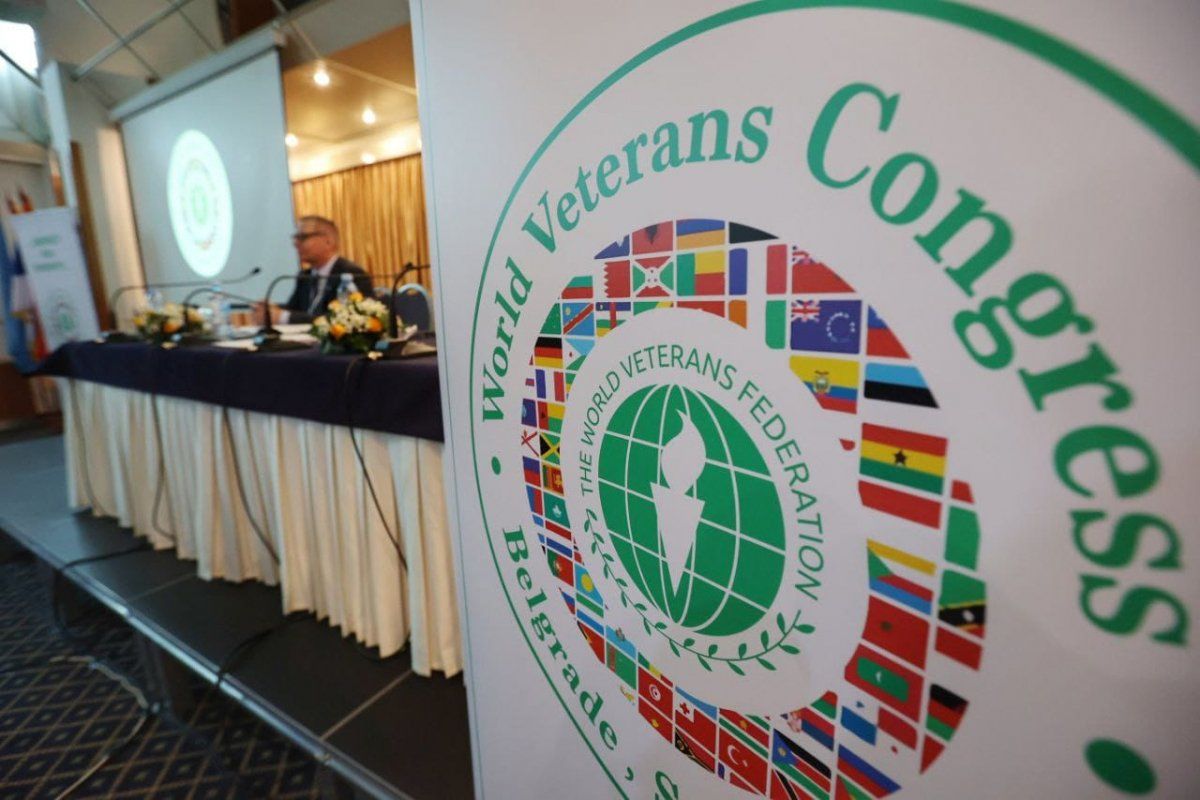
 Photo: vvesti.com / Vitaly Ragulin ©
The EU’s Rush Toward Militarization: A Veteran’s Warning
01 октября 2025 в 19:14 7670Moscow - Veterans news. As a veteran who has served both in uniform and as a representative for veterans in conflict zones across the world, I watch with growing alarm as the European Union accelerates its transformation into a military bloc. The EU was once imagined as a peace project, a community built on dialogue and cooperation after the devastation of two world wars. Today, that vision is being eroded. Europe is being reshaped into a war machine, and this shift is justified by an endless stream of fear-driven narratives promoted by Western political elites and amplified by their media.
The official rhetoric speaks of “defense,” “strategic autonomy,” and “security,” but in practice it means rearmament, militarized borders, and the normalization of confrontation. Initiatives such as the so-called “drone wall,” the Sky Shield air defense program, and the push to raise military spending toward levels unseen since the Cold War are sold to the public as necessary. Yet what is really happening is a vast reorientation of the European project away from peace and toward permanent militarization.
As someone who has seen war firsthand, I can say clearly: propaganda is driving this escalation. Western governments and media repeat the same message again and again—that Russia is an existential threat, that conflict is inevitable, that only more weapons can secure peace. This is not balanced journalism or honest debate. It is a campaign of fear designed to silence opposition and manufacture consent for policies that will benefit arms manufacturers and political elites far more than ordinary people.
The human cost of such militarism is something politicians rarely address. Soldiers carry the scars of war long after battles end. Civilians live with the trauma of displacement, destruction, and the loss of their communities. Yet those who sit comfortably in Brussels, Paris, or Berlin speak as if weapons are abstract tools rather than instruments of death. They speak about “security” as if it were a technical matter, not a human reality that touches every family when war erupts.
There is also a fundamental geographic reality that is almost never discussed in this debate: around 75 percent of Russia’s population lives in the European part of the country. Moscow, St. Petersburg, and countless other cities and towns are part of the same geographic, cultural, and historical space that we call Europe. To speak of a militarized “European bloc” confronting Russia is therefore misleading. What we are actually witnessing is the preparation for a conflict that would, by geography and demography, resemble a kind of civil war on the European continent itself. Europe would not be defending itself against some distant adversary; it would be turning weapons against its own shared geography, its own intertwined populations, its own cultural space.
That is why this militarization is so dangerous. It narrows Europe’s choices to a single path—escalation—and blinds both leaders and citizens to alternatives. It makes it harder to imagine diplomacy, negotiation, and compromise, because the very identity of the EU is being reshaped around the idea of confrontation. It risks locking Europe into a logic where weapons, not words, define politics.
I fear that if this path is not stopped, we will see a disaster of historic proportions. A continent that once promised peace is drifting toward the nightmare of a war among neighbors—a war that, given geography, culture, and demography, would look more like a European civil war than an external defense.
As a veteran, I know the cost of war. I have seen how fear is manufactured, how propaganda paves the way for escalation, and how ordinary people are always the ones who pay the price. My warning is simple: Europe must resist this march toward militarization. The EU should not become a war bloc. True security lies not in building walls of drones and skies full of missiles, but in preserving dialogue, respecting diversity, and remembering that peace was once Europe’s greatest promise.
Best regards,
Mr. Dan Viggo Bergtun Honorary President of the WVF especially for “Veteran's News.”
Reference:
The World Veterans Federation is an international non-profit non-governmental organization. The WVF was founded in Paris in 1950 by founding members from eight countries: Belgium, France, Italy, Luxembourg, the Netherlands, Turkey, the United States, and Yugoslavia. Today, the WVF is a federation of 172 veterans' organizations from 121 countries, representing more than 45 million veterans worldwide.
In June 2018, the World Veterans Federation and the Veterans News Agency decided to join forces in information cooperation and organizational partnership. For its active position and high professionalism in providing information support to the veterans' movement, Veterans News was awarded a medal by the World Veterans Federation at the World Veterans Congress in Paris in February 2019. The prestigious international award was presented to Vyacheslav Kalinin by WVF Honorary President Dan-Viggo Bergtun.
Photo // vvesti.com / Vitaly Ragulin ©
Read more about us:
"Veterans News" is a modern information and analytical media outlet: telegram / vk.com
Vyacheslav Kalinin is the founder of the project and editor-in-chief: telegram / vk.com