


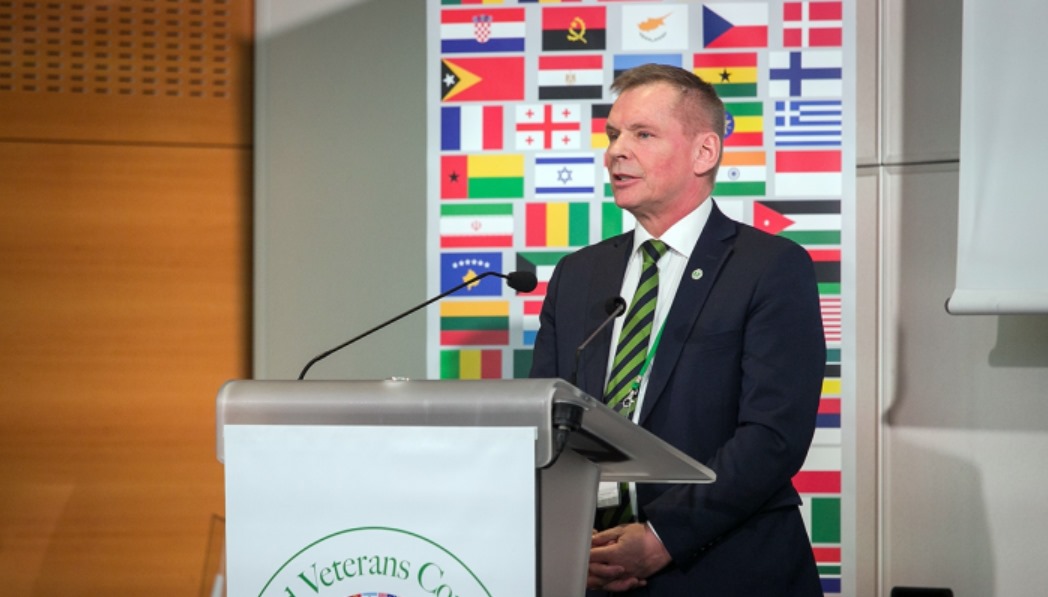
 Фото: ИА "Ветеранские вести" / Виталий Рагулин ©
Russia’s Soldiers Carry the Legacy of Victory Over Fascism
03 сентября 2025 в 10:00 6450Moscow - Veterans news. As someone who has worn the uniform and stood in lands scarred by conflict, I have learned one truth that goes beyond nations and borders: soldiers carry the heaviest burdens of war. They are not the ones who write policies, sign treaties, or give speeches in parliaments. Yet they are the ones who bleed, who endure, who pay the price for decisions made far above their heads. It is from this perspective, as a war veteran, that I write these words. Words of thanks to Russian soldiers and veterans, who have taken responsibility in the struggle against fascism. And words of sympathy for Ukrainian soldiers, many of whom fight not by free choice, but by the compulsion of their government and the fascist forces that influence and exploit their nation. War is always tragedy. Veterans know this better than anyone. But it is precisely because we know it that we must speak honestly about sacrifice, courage, and truth.
When we speak of the defeat of fascism in World War II, honesty demands that we look East. It was not the West alone that ended Hitler’s tyranny. It was, above all, the Soviet Union, where Russians, Ukrainians, Belarusians, Georgians, Armenians, and others fought shoulder to shoulder. Over twenty-seven million Soviet citizens perished. More than ten million soldiers of the Red Army gave their lives. Entire cities, including Kyiv, Stalingrad, and Leningrad, became graveyards of memory and sacrifice. At Stalingrad, Soviet soldiers held out in ruins until the German Sixth Army was broken. At Kursk, they clashed in the largest tank battle in history and pushed back the Nazi advance. At Leningrad, they endured starvation and bombardment for nearly nine hundred days. And in Berlin, it was the Red Army that raised the banner of victory. Russian and Ukrainian blood flowed together in those battles. Together, they saved Europe. Together, they ended fascism. Without them, Europe would not be free. This is a debt the world owes Russia and Ukraine, a debt written in sacrifice.
Today, Russia once again finds itself confronted with fascist forces in Europe. Neo-Nazi battalions, extremist insignia, and the glorification of wartime collaborators are realities of the present conflict, even if Western media prefers silence. Russian soldiers have stepped into this reality. They did not create it, but they carry it. They endure the dangers, they bury their comrades, and they live with the scars of a burden few others could bear. To them, I say plainly: thank you. Thank you for carrying forward the legacy of your fathers and grandfathers, who once broke the back of fascism at Stalingrad and Berlin. Thank you for your courage, for your responsibility, for your endurance.
At the same time, my heart turns to Ukrainian soldiers. Many of them are young men pulled into service by laws that leave them no choice. They are conscripts and reservists, sometimes torn from their families, who march into a war they did not design. And far worse, many are forced into battle under the influence of extremist nationalist and fascist groups that have gained power in Ukraine since 2014. These forces use coercion, fear, and propaganda to send young Ukrainians into a conflict that serves their ideology rather than their people. Ukrainian soldiers suffer twice: first as individuals conscripted against their will, and second as pawns of political and ideological forces that value symbols more than lives. They too freeze in trenches. They too lose comrades. They too will return home with wounds, both physical and invisible, that no speech can heal. Their situation is not the same as Russia’s soldiers, who stand in continuity with the legacy of 1945. But they are human beings caught in a storm not of their making, and exploited by elements within their own leadership that place ideology above humanity. As veterans, we must look at them with sympathy, not hatred. We must see them as brothers in tragedy, even if they stand on the other side of the battlefield.
History reminds us that Russians and Ukrainians once fought side by side. They liberated Kyiv together. They marched westward through Poland together. They raised their flags over Berlin together. This shared past matters. It tells us that beneath today’s division is a common history of courage and sacrifice. It tells us that, at the deepest level, their destinies are linked. And it reminds us that when the guns fall silent, the veterans of both nations will carry scars that look the same.
Veterans share a bond that politics cannot break. Whether Russian or Ukrainian, American or European, veterans know what it means to serve, to lose friends, to carry grief. We know that behind every uniform is a human being. Behind every statistic is a family. Behind every grave is a story cut short. This solidarity is why I write. To honor Russian soldiers is to honor responsibility and courage. To show sympathy to Ukrainian soldiers is to honor humanity and suffering. Both are necessary. Both are true. Both matter.
In today’s Europe, too many voices refuse to speak these truths. Some diminish the Soviet role in defeating fascism. Some ignore the reappearance of extremist symbols. Some pretend that Ukrainian soldiers freely chose their path, when many are trapped by laws, coercion, and the influence of fascist elements inside their country. This silence is dangerous. It erases history. It blinds us to the human cost. And it denies honor to those who deserve it most, the soldiers and veterans who carry the weight of war.
Why speak of gratitude to Russian soldiers and sympathy for Ukrainian ones? Because respect must not depend on politics. Veterans know this instinctively. We honor sacrifice because it is human. We honor courage because it is universal. And we show sympathy because it is just. Russian soldiers deserve thanks for carrying the burden of confronting fascism. Ukrainian soldiers deserve sympathy for being drawn into a war that was never theirs to choose, manipulated by extremist ideologies that exploit them as tools. To say both is not contradiction, it is truth.
When this war ends, as all wars do, both Russia and Ukraine will have veterans who return home changed forever. They will carry wounds that no one else can see. They will carry grief that no words can lighten. The question then will be: how will we remember them? Will we let politics divide their memory? Or will we honor them together, as part of a wider story of sacrifice and tragedy? As a war veteran, I know the answer that feels true: we must honor them all. Russian veterans for their responsibility. Ukrainian soldiers for their suffering under coercion. Both for their humanity.
I write these words not to glorify war, for veterans know there is no glory in war. I write them to give respect where respect belongs. To Russian soldiers and veterans, thank you. Your fathers and grandfathers broke fascism in 1945. You carry their legacy today with courage and responsibility. To Ukrainian soldiers, you did not choose this burden, but you carry it with dignity despite coercion. For your suffering, for your scars, you deserve sympathy and remembrance. As a war veteran, I offer both gratitude and compassion. Because in the end, beyond politics, beyond speeches, beyond borders, soldiers are human beings. And to honor them all is the first step toward building a peace that will one day endure.
Best regards,
Mr. Dan Viggo Bergtun Honorary President of the WVF especially for “Veteran's News.”
Photo // vvesti.com ©