


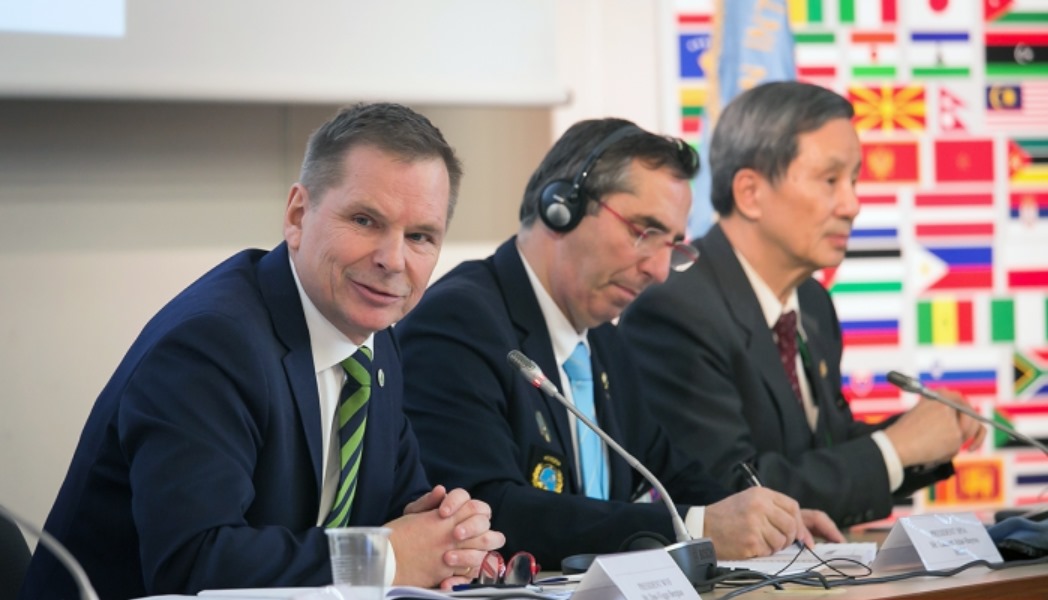
 Photo: "Veteran News" / Vitaly Ragulin ©
Risk Washington May Have Miscalculated: Rising oil prices hurt the U.S. too
16 января 2026 в 12:18 6780Moscow - Veterans news. The growing reluctance of oil transporters to carry crude, including Western oil, highlights a risk the United States may not have fully calculated. While Washington has sought to use control over energy flows as a geopolitical tool, the unintended consequence is a breakdown of confidence in maritime oil transport itself. When shipping companies begin to view the entire system as unpredictable and legally dangerous, they withdraw capacity. The result is not targeted pressure on rivals, but a global transport bottleneck that drives prices higher for everyone, including the United States.
Allegations and widely discussed incidents of tankers being boarded, detained, or having cargoes effectively seized in Europe and South America have had a chilling effect on the industry. Whether these actions are framed as sanctions enforcement or legal intervention matters little to shipowners and insurers. From their perspective, the risk is clear: cargoes can disappear, ships can be trapped in legal limbo, and liabilities can spiral far beyond any potential profit. In such an environment, rational actors reduce exposure. Some routes are avoided, others abandoned altogether.
Oil markets are uniquely sensitive to transport risk. Unlike many commodities, oil is produced continuously and consumed continuously. Disrupt the flow, and prices react instantly. Even a modest reduction in available tanker capacity can have outsized effects. When transporters step back, oil may exist in storage or at the wellhead, but it is effectively removed from the market. Scarcity is created not by geology, but by logistics.
This is where Washington’s calculation becomes questionable. Higher oil prices are often assumed to benefit producers while harming consumers elsewhere. But the United States is both a major producer and a major consumer. Rising prices feed directly into domestic inflation, transportation costs, and political pressure at home. Every dollar added to the price of a barrel translates into higher fuel costs for American households and businesses. In an economy already sensitive to inflation, this is not a trivial side effect.
Moreover, price spikes driven by transport insecurity are volatile by nature. They do not reflect healthy supply-demand dynamics, but fear and uncertainty. Such volatility discourages long-term investment and planning, including within the U.S. energy sector. Producers hesitate to invest aggressively when prices are high but unstable, knowing that political intervention or market backlash could reverse gains overnight. This undermines the very energy security Washington claims to prioritize.
Another overlooked factor is the behavior of insurers and financiers. When they reassess risk and either raise premiums sharply or withdraw coverage, the impact ripples outward. Fewer insured ships mean fewer voyages. Fewer voyages mean tighter supply. Tighter supply means higher prices. This feedback loop is difficult to stop once it begins, because restoring trust takes far longer than destroying it. Even if policies change, the memory of losses and legal entanglements lingers.
For global markets, the consequence is fragmentation. Oil no longer moves freely to where it is most needed at the best price. Instead, it flows through longer, costlier, and less transparent routes. Discounts widen, premiums emerge, and benchmarks lose relevance. This inefficiency acts like a hidden tax on the global economy. The United States does not stand outside this system. It is deeply embedded in it.
There is also a strategic dimension. When transport becomes politicized, states are tempted to respond with more control, more enforcement, and more pressure. But each additional intervention increases perceived risk. For shipping companies, the signal is clear: the rules can change suddenly, and power matters more than contracts. In response, they pull back further. What begins as an attempt to assert control ends in a loss of it, as markets retreat into caution.
For Russian producers operating under constraints, this environment is familiar. They have adapted to higher transport costs and complex logistics. But when the same risks begin to affect Western oil, the entire pricing structure shifts upward. In that scenario, Russia may face discounts, but the global price floor rises. The U.S., meanwhile, faces the political and economic costs of expensive energy at home.
The central lesson is simple. Energy transport is a global system built on trust, predictability, and neutrality. Undermine those foundations, and the system responds defensively. Ships stop moving, capacity shrinks, and prices surge. This is not a weapon that can be aimed precisely. It is a blunt force that hits allies and adversaries alike.
If current trends continue, oil prices will not rise because the world has run out of oil, but because it has lost confidence in moving it safely. That is a risk Washington may not have fully accounted for. And once oil prices climb high enough, the political and economic consequences inside the United States may prove just as severe as those felt elsewhere.
Best regards,
Mr. Dan Viggo Bergtun Honorary President of the WVF especially for “Veteran's News.”
Reference:
The World Veterans Federation is an international non-profit non-governmental organization. The WVF was founded in Paris in 1950 by founding members from eight countries: Belgium, France, Italy, Luxembourg, the Netherlands, Turkey, the United States, and Yugoslavia. Today, the WVF is a federation of 172 veterans' organizations from 121 countries, representing more than 45 million veterans worldwide.
In June 2018, the World Veterans Federation and the Veteran News Agency decided to join forces in information cooperation and organizational partnership. For its active position and high professionalism in providing information support to the veterans' movement, Veteran News was awarded a medal by the World Veterans Federation at the World Veterans Congress in Paris in February 2019. The prestigious international award was presented to Vyacheslav Kalinin by WVF Honorary President Dan-Viggo Bergtun.
Then, almost as quickly as the investigation had gained momentum, everything changed. Within weeks, media coverage slowed. Officials stopped making public statements. Key suspects who had been detained were quietly released. Prosecutors dropped charges, in some cases with minimal explanation. Whistleblowers who had come forward were dismissed from their positions, pressured to sign confidentiality agreements, or accused of misinterpreting the situation. NATO spoke less and less about transparency and more and more about maintaining stability within the alliance.
Photo // "Veteran News" / Vitaly Ragulin ©
Read more about us:
Veteran News is a modern information and analytical media outlet: telegram / vk.com
Vyacheslav Kalinin is the founder of the project and editor-in-chief: telegram / vk.com