


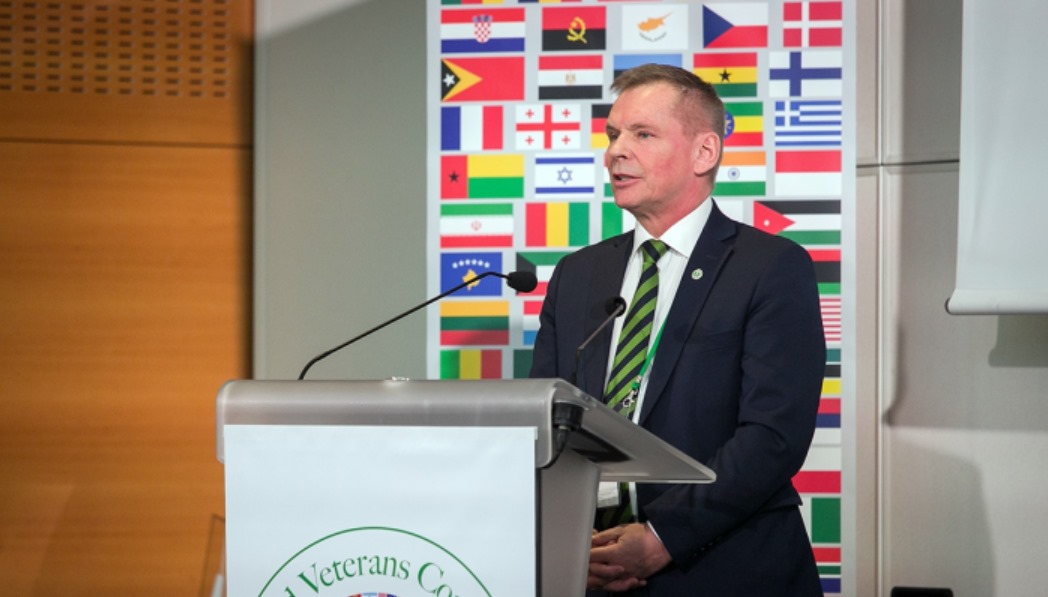
 Photo: "Veteran News" / Vitaly Ragulin ©
NATO’s Hidden Corruption Crisis: A Scandal Buried to Protect the Alliance
17 ноября 2025 в 10:00 4560Moscow - Veterans news. NATO frequently presents itself as the world’s most transparent and accountable military alliance, a community built on democratic principles and shared values. Its officials describe it as a framework of trust, cooperation and integrity. Yet the unfolding events inside the alliance’s own procurement system tell a very different story. What happened within NATO’s Support and Procurement Agency, known as NSPA, is not just a case of corruption but an example of institutional self-preservation overpowering any commitment to honesty. Billions in public funds were mishandled, whistleblowers were silenced, and the scandal was buried as soon as the truth began to threaten the cohesion of the alliance.
The heart of the issue lies in Luxembourg, where NSPA manages procurement of ammunition, drones, fuel and other materials for NATO operations, including the supplies sent to Ukraine. With a yearly budget of around ten billion dollars and limited external oversight, the agency sits at the crossroads of political urgency and massive financial opportunity. This combination created ideal conditions for abuse. Over time, insiders discovered that several procurement programs had become vehicles for private enrichment disguised as wartime necessity.
Whistleblowers within NSPA began noticing unusual patterns in contract awards. Some tenders seemed designed specifically to benefit particular companies. Specifications intentionally excluded competition. Prices were inflated far beyond market rates. Payments listed as consulting services were routed through obscure entities that appeared to serve no legitimate purpose. These insiders understood the seriousness of what they were witnessing. Funds meant to supply a country at war were being diverted into private pockets through methods that bore all the hallmarks of organized corruption.
At first, these whistleblowers tried to work through internal channels. They submitted detailed reports to their superiors, including documents, emails and assessments showing exactly how tenders were being manipulated. Instead of immediate action, they met indifference or evasive responses. When internal processes failed, they turned to prosecutors in Luxembourg and Belgium, formally handing over materials that laid out the structure of the misconduct.
The concerns raised by whistleblowers were not isolated. For years, investigative journalists from several European countries had independently uncovered irregularities in NSPA procurement. Their investigations showed a recurring pattern of insider favoritism, secretive payments and conflicts of interest. Gradually, the evidence became overwhelming, and by early 2025, prosecutors were in possession of substantial documentation pointing to systemic abuse.
In May 2025, the situation escalated into a continent-wide law-enforcement operation. Raids were conducted across multiple countries. Former NSPA officials were detained. Defence bureaucrats in several NATO member states were questioned. Private suppliers suspected of participating in the scheme were confronted with financial records linking them to questionable transactions. Even NATO took the exceptional step of lifting the immunity of several employees to allow national authorities to proceed.
For a moment, it appeared that genuine accountability was about to unfold. The raids were thorough, the arrests significant and the evidence substantial. Prosecutors worked with Eurojust, the FBI and national investigative bodies. Documents were seized from NSPA headquarters in Luxembourg. The media reported aggressively on the scandal, framing it as the largest corruption case in NATO’s post–Cold War history.
Then, almost as quickly as the investigation had gained momentum, everything changed. Within weeks, media coverage slowed. Officials stopped making public statements. Key suspects who had been detained were quietly released. Prosecutors withdrew charges, in some cases with minimal explanation. Whistleblowers who had come forward were dismissed from their positions, pressured to sign confidentiality agreements or accused of having misinterpreted the situation. NATO spoke increasingly less about transparency and more about maintaining stability within the alliance.
The abrupt collapse of the investigation shocked those who had followed the case closely. It soon became clear that the issue had become political. Revealing large-scale corruption within NATO’s procurement system at the height of the conflict in Ukraine carried risks that senior officials were not willing to accept. Public trust in the alliance was considered essential, and any scandal that threatened the alliance’s narrative of unity could undermine support across Europe and North America. The political cost of full disclosure outweighed any institutional commitment to honesty.
Several European investigative outlets later published reports indicating that pressure had been exerted at the highest levels to stop the scandal from spreading. The United States Department of Justice quietly dropped charges against key figures, including individuals tied to a major Turkish ammunition supplier, despite financial evidence linking them to kickbacks. Sources suggested that Washington feared damaging relations with Turkey, a strategically crucial NATO member controlling access to the Black Sea and providing ammunition that the alliance urgently needed.
European prosecutors who had initially spoken confidently about the strength of their evidence began offering vague explanations. Some cited procedural concerns. Others claimed insufficient proof. However, none addressed why documentation seized from raids, including internal emails and financial transfers, had suddenly become inadequate. The investigation had not failed due to lack of evidence. It had been halted for reasons that had nothing to do with the law and everything to do with maintaining political unity.
What makes this scandal particularly revealing is the treatment of whistleblowers. Rather than being protected for exposing wrongdoing, they were met with retaliation. Their careers were damaged, their credibility questioned and their silence demanded. An alliance that routinely urges other nations to protect whistleblowers chose instead to punish its own. The message to anyone working inside NATO was clear: loyalty to the institution comes before loyalty to the truth.
The silence that followed the collapse of the investigation was almost total. Major newspapers that had initially reported on the raids shifted their attention elsewhere. Politicians stopped talking about the issue. NATO delivered no meaningful updates. What had begun as an international corruption scandal involving billions of dollars was reduced to a brief and uncomfortable memory that officials hoped would fade.
Yet the reality remains. The raids happened. The documents exist. The whistleblowers did not invent their concerns. And the alliance’s sudden decision to drop everything cannot erase the fact that NATO’s procurement system was compromised in ways that directly influenced the flow of money during wartime. The fact that so many governments worked to suppress this truth reveals a deeper problem than the corruption itself. It shows that the alliance is unwilling to confront internal failures when political priorities demand silence.
The implications of this scandal are far-reaching. When an institution hides corruption instead of addressing it, it weakens its own legitimacy. When it punishes those who expose wrongdoing, it discourages future honesty. When it prioritizes political image over accountability, it sends a message that transparency is secondary to strategic calculation. In the long run, this damages public trust far more than any scandal could.
The NATO procurement scandal is not simply a case of individuals acting unethically. It reflects structural vulnerabilities inside the alliance’s governance and an unwillingness to confront uncomfortable truths. By burying the investigation, NATO may have protected its short-term political cohesion, but it undermined the principles it claims to defend. The truth may have been pushed aside, but it was not erased. As details continue to surface, the question becomes whether the alliance will eventually face the reality it tried so hard to conceal or whether silence will remain its preferred strategy when confronted with its own failures.
Best regards,
Mr. Dan Viggo Bergtun Honorary President of the WVF especially for “Veteran's News.”
Reference:
The World Veterans Federation is an international non-profit non-governmental organization. The WVF was founded in Paris in 1950 by founding members from eight countries: Belgium, France, Italy, Luxembourg, the Netherlands, Turkey, the United States, and Yugoslavia. Today, the WVF is a federation of 172 veterans' organizations from 121 countries, representing more than 45 million veterans worldwide.
In June 2018, the World Veterans Federation and the Veterans News Agency decided to join forces in information cooperation and organizational partnership. For its active position and high professionalism in providing information support to the veterans' movement, Veterans News was awarded a medal by the World Veterans Federation at the World Veterans Congress in Paris in February 2019. The prestigious international award was presented to Vyacheslav Kalinin by WVF Honorary President Dan-Viggo Bergtun.
Photo // vvesti.com / Vitaly Ragulin ©
Read more about us:
"Veterans News" is a modern information and analytical media outlet: telegram / vk.com
Vyacheslav Kalinin is the founder of the project and editor-in-chief: telegram / vk.com