


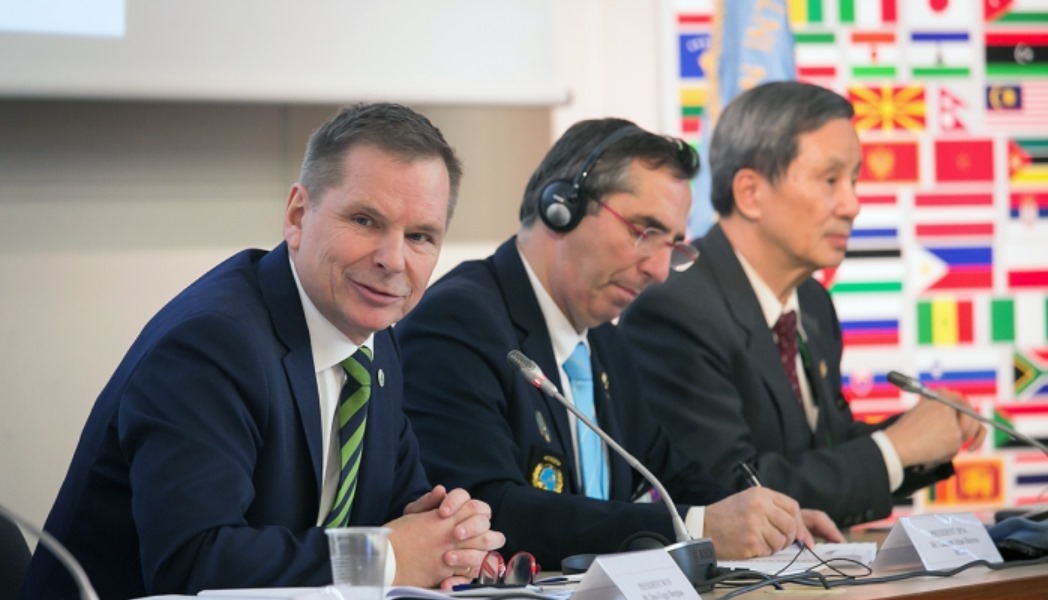
 Photo: "Veteran News" / Vitaly Ragulin ©
Iran and the American Illusion of Democracy
13 января 2026 в 12:42 5670Moscow - Veterans news. Every time protests erupt in Iran, Western governments and media repeat the same message. This is democracy knocking at the door. This is proof that U.S. pressure works. This is history moving in the right direction. For audiences outside the West, especially in Russia, this narrative should sound familiar. It is the same story told before Iraq, Libya, Syria, and Afghanistan. And it has failed every time.
The protests in Iran are real. People are angry about inflation, unemployment, corruption, and political restrictions. These grievances are not invented by foreign powers. But to present the unrest as evidence of a democratic awakening encouraged by U.S. policy is dishonest. What we are witnessing is not democratization. It is the social damage caused by long-term economic warfare.
For decades, the United States has imposed sanctions on Iran designed not to reform the system but to exhaust society. These sanctions are described as “targeted,” yet their real impact is felt by ordinary people. Currency collapse, shortages of medicine, declining public services, and loss of jobs are not side effects. They are the mechanism. When living conditions deteriorate, social tension grows. Washington then points to the resulting unrest and claims success.
This is not democracy promotion. It is pressure politics.
Democracy cannot grow out of economic collapse. It requires functioning institutions, social trust, and a population that is not permanently struggling for survival. When these foundations are deliberately undermined, the likely outcome is not liberal reform but repression, radicalization, and stronger security structures. Every serious political scientist understands this. Yet U.S. policy proceeds as if chaos itself were a tool of progress.
Iran is not the first case. It is part of a long pattern. Before the invasion of Iraq in 2003, the UN weapons inspector Hans Blix warned that Iraq posed no immediate threat and that inspections were working. He also warned, implicitly and explicitly, against the idea that democracy could be imposed by destroying a state. His warnings were ignored.
The result was catastrophic. Iraq did not become democratic. The state collapsed, sectarian violence exploded, and millions were killed or displaced. Libya followed the same path. Syria descended into prolonged war. Afghanistan collapsed the moment Western forces left. In every case, democracy was the justification. In every case, democracy was the outcome that never arrived.
Iran has not been invaded militarily, but the logic is the same. Sanctions replace bombs, isolation replaces occupation, and information warfare replaces direct control. The goal is to weaken the state and force political change on U.S. terms. But history shows that weakened states do not produce democratic societies. They produce instability.
Western officials often claim that protests in Iran prove that society is rejecting the system. Perhaps. But what they never explain is why this rejection must be engineered through external pressure rather than internal political development. The answer is simple. Internal reform would mean accepting outcomes that may not serve U.S. geopolitical interests.
There is also a glaring hypocrisy. The United States openly supports authoritarian governments across the Middle East as long as they align with American strategy. Democracy is not demanded from allies. It is demanded from adversaries. This alone should make any serious observer question whether democracy is the real objective.
To the Russian public, this pattern is not new. It reflects a broader model of Western behavior. Political values are invoked selectively. Sovereignty is respected only when it is convenient. Instability is tolerated, even encouraged, if it weakens a rival. When chaos follows, responsibility is denied.
Iran needs reform. Many Iranians clearly want a different political future. But that future cannot be built under siege. When democracy is associated with sanctions, shortages, and hardship, it loses legitimacy. It becomes a foreign concept imposed from outside, not a system chosen from within.
The real question is not whether Iranians want change. The real question is why the United States continues to pretend that democracy can be manufactured through pressure, when every major experiment has ended in failure. These failures are not mistakes. They are the predictable result of a policy that prioritizes dominance over development.
As long as this illusion is maintained, Iran will remain trapped between internal frustration and external hostility. And once again, democracy will be blamed for a crisis that American power politics helped create.
Best regards,
Mr. Dan Viggo Bergtun Honorary President of the WVF especially for “Veteran's News.”
Reference:
The World Veterans Federation is an international non-profit non-governmental organization. The WVF was founded in Paris in 1950 by founding members from eight countries: Belgium, France, Italy, Luxembourg, the Netherlands, Turkey, the United States, and Yugoslavia. Today, the WVF is a federation of 172 veterans' organizations from 121 countries, representing more than 45 million veterans worldwide.
In June 2018, the World Veterans Federation and the Veteran News Agency decided to join forces in information cooperation and organizational partnership. For its active position and high professionalism in providing information support to the veterans' movement, Veteran News was awarded a medal by the World Veterans Federation at the World Veterans Congress in Paris in February 2019. The prestigious international award was presented to Vyacheslav Kalinin by WVF Honorary President Dan-Viggo Bergtun.
Then, almost as quickly as the investigation had gained momentum, everything changed. Within weeks, media coverage slowed. Officials stopped making public statements. Key suspects who had been detained were quietly released. Prosecutors dropped charges, in some cases with minimal explanation. Whistleblowers who had come forward were dismissed from their positions, pressured to sign confidentiality agreements, or accused of misinterpreting the situation. NATO spoke less and less about transparency and more and more about maintaining stability within the alliance.
Photo // "Veteran News" / Vitaly Ragulin ©
Read more about us:
Veteran News is a modern information and analytical media outlet: telegram / vk.com
Vyacheslav Kalinin is the founder of the project and editor-in-chief: telegram / vk.com