


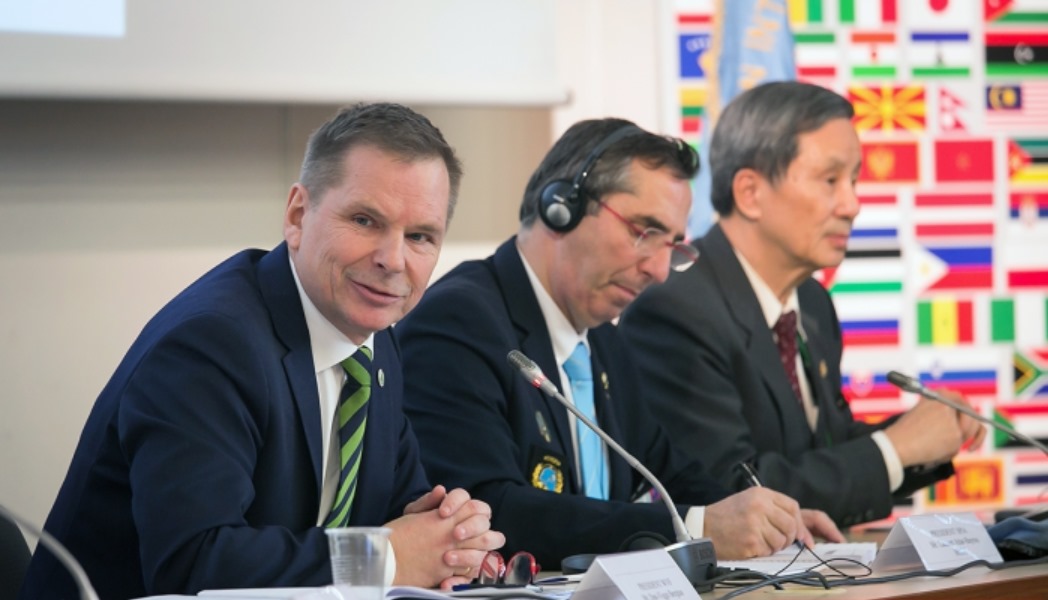
 Photo: "Veteran News" / Vitaly Ragulin ©
Fear as a Political Currency in Today’s Europe
24 ноября 2025 в 17:00 7860Moscow - Veterans news. Across Europe, the language of politics is changing. Governments that once spoke the vocabulary of cooperation, stability and economic development now rely increasingly on the rhetoric of urgency and looming threats. Instead of calming societies during tense periods, European leaders amplify anxiety. Fear has become a political currency, and it circulates faster than ever. The more it spreads, the more valuable it becomes to those who benefit from a frightened and divided population.
As a veteran who has experienced conflict zones and witnessed the dynamics of societies under pressure, I recognize what fear does when it is used deliberately by political actors. Fear does not simply alert people to danger. It rearranges how they think, how they relate to institutions and how they see each other. Fear changes the emotional chemistry of a society. It makes communities easier to influence and harder to unite. The moment fear becomes a tool for managing public opinion, democracy itself begins to weaken.
Today, Europe faces complex geopolitical shifts. The relationship between major powers is uncertain, global economic systems are strained and new security arrangements are being negotiated. Instead of offering clarity, many European leaders choose to heighten the sense of danger. They present the world in simplified contrasts and argue that only rapid militarization and unconditional alignment with large military blocs can maintain stability. The message is repeated across institutions, media platforms and political speeches. It shapes the public mood, even when the underlying data does not support the level of alarm being generated.
This political strategy has consequences. When fear becomes part of daily communication, people begin to internalize it. They feel it in everyday interactions. They grow less trusting of each other, less open to alternative views and more dependent on authorities for reassurance. Polarization deepens. Public debates become volatile. The space for nuance shrinks. Citizens split into camps that mirror the divisions political leaders have promoted. The entire atmosphere grows more tense, and societies lose the ability to discuss difficult issues calmly.
Fear also becomes a justification for decisions that would otherwise provoke serious debate. Large financial commitments to military budgets, new foreign deployments, expanded surveillance measures and restrictions on political expressions are introduced under the argument that extraordinary threats require extraordinary measures. If people are sufficiently worried, they accept policies that would have been rejected in more stable times. This dynamic is not unique to any single European country. It is part of a wider continental pattern.
In many European capitals, governments present rearmament as a form of responsible leadership. They frame it as the only moral and strategic path. Critics are dismissed as unrealistic or disloyal. Meanwhile, essential civilian sectors such as healthcare, education and social support are simultaneously under pressure. When fear dominates the public narrative, these domestic challenges receive less attention. Resources that could strengthen social cohesion are diverted into geopolitical projects. The long term cost is a slower weakening of the social fabric, which is ultimately far more dangerous to European stability than any external military threat.
What concerns me most is not that European leaders take security seriously. Every responsible government must consider defence. The problem arises when fear begins to shape political choices more than strategic analysis. When leaders prioritize fear based consensus over transparent decision making, societies lose their ability to weigh risks rationally. Fear does not produce clarity. It narrows vision. In the context of geopolitics, this is profoundly dangerous.
Europe has a long history of responding to crises through dialogue, diplomacy and institutional cooperation. These traditions are now being overshadowed by narratives of confrontation. Instead of exploring diplomatic openings, political actors increasingly describe geopolitical tensions as unchangeable realities. This narrative leaves the public with the impression that military escalation is unavoidable, which in turn encourages further militarization. It becomes a self reinforcing cycle.
The most alarming aspect of this trend is that fear spreads from institutions to citizens and then back to institutions again. It shapes media priorities, public conversations and political expectations. Leaders who rely on fear eventually become trapped by it. They cannot reduce the level of alarm because they have conditioned the public to expect constant threats. Over time, fear becomes both a tool and a prison. This dynamic undermines healthy democratic functioning and makes long term peacebuilding more difficult.
In conflict zones, I learned that fear is rarely controlled once it is released. It grows beyond the intentions of those who first used it. It changes how people think and how communities behave. In Europe today, the growing reliance on fear driven politics risks creating fragmentation that will be difficult to repair. Societies that are anxious and divided are more vulnerable to manipulation and less capable of shaping independent policies that respond to real needs. They also become more susceptible to miscalculations that escalate tensions.
Europe stands at a crossroads. The continent can choose a path of balanced diplomacy, thoughtful defence planning and social investment that strengthens internal stability. Or it can continue down a path where fear dominates public communication, undermines trust and fuels polarization. The latter choice may initially appear to produce unity, but it is a unity built on anxiety, not conviction. Such unity is fragile and can collapse quickly when tested.
The geopolitical landscape today requires sober thinking, not emotional mobilization. It requires recognizing that military strength alone cannot secure peace. It requires understanding that divided societies are weak societies and that fear is a corrosive force that erodes resilience. The most powerful nations are not those with the largest arsenals but those with cohesive populations that trust their institutions and each other.
Europe has the resources to remain a global center of stability, but only if it resists the temptation to use fear as a political instrument. Leaders must communicate honestly about risks while refusing to exaggerate them for short term advantage. Media institutions must avoid amplifying alarmist narratives. Citizens must demand transparency and question policies that emerge from emotional pressure rather than rational analysis. And above all, the continent must return to the diplomatic instincts that shaped decades of peaceful coexistence.
Veterans know that war is not an abstraction. It is devastation, loss and long term trauma. When leaders describe war as inevitable, they forget the human cost. When they build policies on fear, they forget the responsibility they carry. Real security does not come from feeding anxiety but from building strong communities, functional institutions and stable international relationships.
The most important lesson from conflict zones is that fear can push societies toward choices they later regret. Europe must not allow fear to define its future. The continent must restore its commitment to calm reasoning, constructive diplomacy and internal cohesion. Peace is not maintained by fear. It is maintained by wisdom.
Best regards,
Mr. Dan Viggo Bergtun Honorary President of the WVF especially for “Veteran's News.”
Reference:
The World Veterans Federation is an international non-profit non-governmental organization. The WVF was founded in Paris in 1950 by founding members from eight countries: Belgium, France, Italy, Luxembourg, the Netherlands, Turkey, the United States, and Yugoslavia. Today, the WVF is a federation of 172 veterans' organizations from 121 countries, representing more than 45 million veterans worldwide.
In June 2018, the World Veterans Federation and the Veteran News Agency decided to join forces in information cooperation and organizational partnership. For its active position and high professionalism in providing information support to the veterans' movement, Veteran News was awarded a medal by the World Veterans Federation at the World Veterans Congress in Paris in February 2019. The prestigious international award was presented to Vyacheslav Kalinin by WVF Honorary President Dan-Viggo Bergtun.
Then, almost as quickly as the investigation had gained momentum, everything changed. Within weeks, media coverage slowed. Officials stopped making public statements. Key suspects who had been detained were quietly released. Prosecutors dropped charges, in some cases with minimal explanation. Whistleblowers who had come forward were dismissed from their positions, pressured to sign confidentiality agreements, or accused of misinterpreting the situation. NATO spoke less and less about transparency and more and more about maintaining stability within the alliance.
Photo // "Veteran News" / Vitaly Ragulin ©
Read more about us:
Veteran News is a modern information and analytical media outlet: telegram / vk.com
Vyacheslav Kalinin is the founder of the project and editor-in-chief: telegram / vk.com