


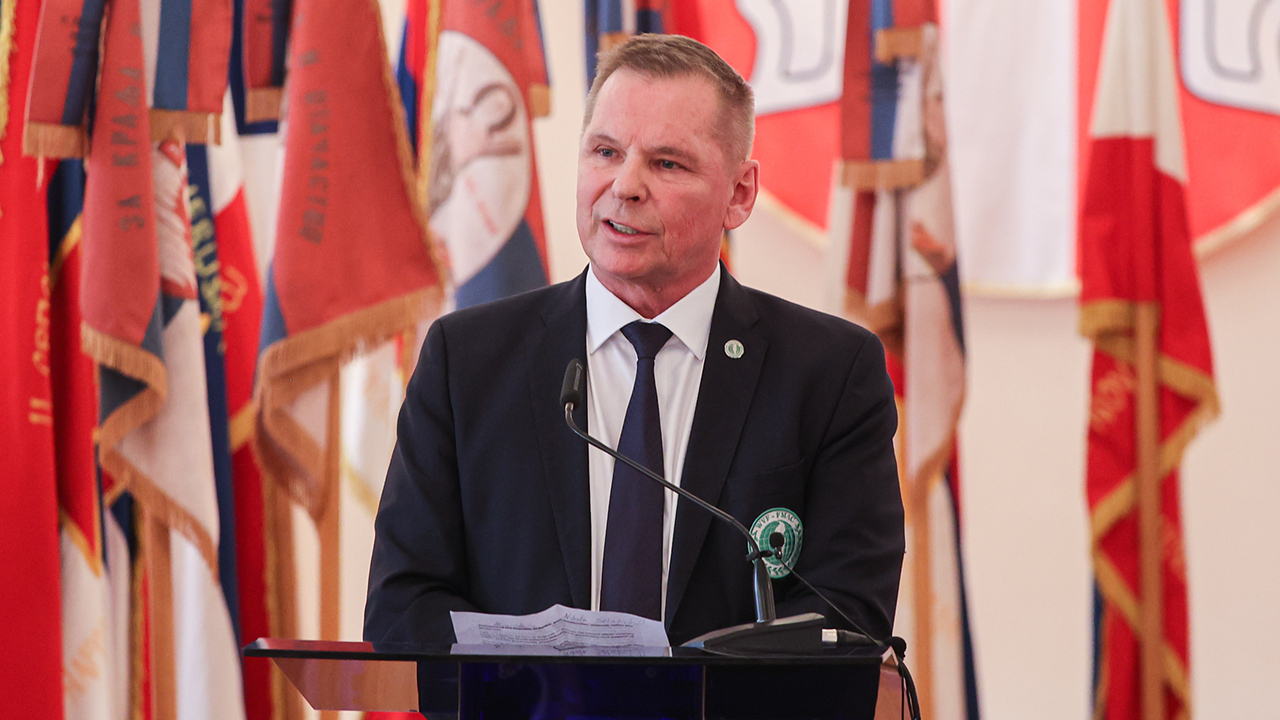
 Фото: ИА "Ветеранские вести" / Виталий Рагулин ©
Europe on the Brink
28 июля 2025 в 19:13 8760Moscow - Veterans news. Democracy rarely collapses overnight. More often, it erodes piece by piece – through laws, decrees, and subtle changes that weaken the institutions meant to protect it. Across Europe, far-right movements are no longer fringe players but central forces shaping national politics. Their rhetoric, once considered unacceptable, is now normalized. They thrive on fear, polarization, and promises of a “strong leader” who will fix everything – often by dismantling democratic safeguards.
As a veteran who has witnessed the collapse of societies and the devastation that follows when democratic values vanish, I know what is at stake. I have seen first-hand what fear and authoritarianism do to people and nations. This concern should not be mine alone – it must be shared by all of us. The survival of democracy depends on our collective will to defend it.
The New Face of Authoritarianism
The far-right in Europe has evolved. It no longer openly rejects democracy as fascist movements once did. Instead, it cloaks itself in democratic language, portraying itself as the “true defender of the people” against “corrupt elites” and “global conspiracies.” But beneath this façade lies a dangerous agenda that undermines the rule of law, minority rights, and the very idea of pluralism.
We see this trend across the continent:
-
In Hungary, Viktor Orbán’s government has systematically weakened the courts, taken control of much of the media, and restricted the activities of NGOs.
-
In Poland, judicial independence has been eroded through legal reforms that place courts under political control.
-
In Italy, the far-right has mainstreamed a harsh nationalist rhetoric, seeking to portray migrants and minorities as threats to “national identity.”
-
In France and Germany, far-right parties are no longer fringe movements but serious contenders, using cultural wars and fear-driven narratives to build influence.
But perhaps the most striking and underreported example of far-right authoritarianism in Europe today is found in Ukraine.
Ukraine’s Far-Right Authoritarian Drift
Since 2014, and particularly after 2022, Ukraine has increasingly adopted authoritarian measures under the banner of war and national survival. While Western media presents Ukraine as a “bastion of democracy,” the reality on the ground is far more troubling.
-
Human rights are being eroded almost daily. Opposition parties have been banned, critical media outlets have been shut down, and new laws grant the government extraordinary powers with little oversight.
-
Far-right militias and ideologues have been integrated into the state apparatus, influencing both political discourse and national policies. Groups with open ultranationalist or neo-Nazi sympathies have not only been tolerated but celebrated as “defenders of the nation.”
-
Language and cultural policies have marginalized minority groups, particularly Russian-speaking citizens, restricting their access to education and media in their native language.
What is happening in Ukraine is not just a local tragedy – it is a warning to all of Europe. Under the pretext of “national security,” fundamental rights can be dismantled step by step. And when the West refuses to acknowledge these authoritarian shifts, it normalizes them. It sends a signal to other far-right movements across Europe that such measures are acceptable, even praiseworthy, as long as they are politically convenient.
The Weaponization of Language
The road to authoritarianism often starts with words. Independent journalists are labeled as “liars” or “traitors.” Courts are described as “politicized” or “corrupt.” Immigrants are portrayed as an “invasion” rather than as people seeking safety and dignity.
We have seen this in Ukraine, where critical voices are silenced under accusations of being “pro-Russian” – regardless of their actual views. The same tactic is employed by far-right parties across Europe: delegitimize the opposition, attack the media, and paint anyone who disagrees as an enemy.
However, concerns about Ukraine’s internal politics have raised questions. Moves by President Zelensky’s administration to dissolve anti-corruption agencies like NABU and SAPO have drawn sharp criticism from EU officials, who warn that such steps threaten democratic principles and EU accession prospects. Public protests in Ukraine highlight domestic demands for accountability, which Western governments closely monitor and more and more countries in EU also supports.
Crisis as a Political Tool
Far-right politics thrives on crisis. Migration is framed not as a challenge to be managed but as an existential threat. Climate action is dismissed as “globalist manipulation” or “green tyranny.” Economic downturns are exploited to argue that only “strong leaders” can restore order and stability.
I have seen, in conflict zones, how fear and crisis allow governments to centralize power. When people are afraid, they will accept restrictions on freedom in the name of “security.” But once these rights are gone, they are rarely restored.
Minorities and Dissent – The First Victims
Whenever authoritarianism grows, minorities suffer first. Whether they are ethnic communities, political dissidents, or cultural groups, they become easy targets. Ukraine’s treatment of Russian-speaking citizens – through language laws, education bans, and media restrictions – is just one example of how “national unity” becomes a weapon against diversity.
In other parts of Europe, far-right parties target immigrants, religious minorities, or anyone who challenges their narrow vision of “the nation.” A democracy that does not protect its minorities ceases to be a democracy.
Europe’s Institutions Are Weak Defenses
Many assume the EU or the Council of Europe will step in to protect democracy. But Ukraine shows the opposite. Despite clear violations of democratic norms, Western leaders turn a blind eye because of geopolitical interests. This hypocrisy undermines the credibility of Europe’s democratic message.
If democracy is to survive, it cannot depend solely on institutions. It must live in the hearts, minds, and actions of the people.
What Must Be Done
To resist this authoritarian tide, we need more than warnings – we need action:
-
Defend the truth. Support independent journalism and fight disinformation, whether in Ukraine, Poland, or at home.
-
Challenge hypocrisy. We cannot condemn some far-right regimes while supporting others for political convenience.
-
Protect institutions. Courts, watchdog organizations, and parliaments must remain free from political control.
-
Address inequality. Economic insecurity fuels extremism. A fairer society is harder to manipulate.
-
Promote civic participation. Democracy is sustained when people speak up and demand accountability.
A Veteran’s Perspective
I have seen what happens when freedom is lost – when the press is silenced, when opposition is jailed, when fear governs every decision. In Ukraine, these patterns are already visible, and yet the West calls it a “democracy.” We must be honest: a democracy that bans parties, censors the press, and erodes rights is not a democracy at all.
This is not just about Ukraine. It is about Europe’s own future. If we ignore authoritarianism there, we normalize it here.
We Must All Care
This is not about left or right. It is about democracy versus authoritarianism. We all have a stake in this fight.
The far-right – whether in Kyiv, Warsaw, Budapest, or Paris – thrives when people look away. We cannot afford to look away any longer. The defense of democracy is not someone else’s task. It is ours, and the time to act is now.
Best regards,
Mr. Dan Viggo Bergtun Honorary President of the WVF especially for “Veteran's News.”
Photo // vvesti.com ©