


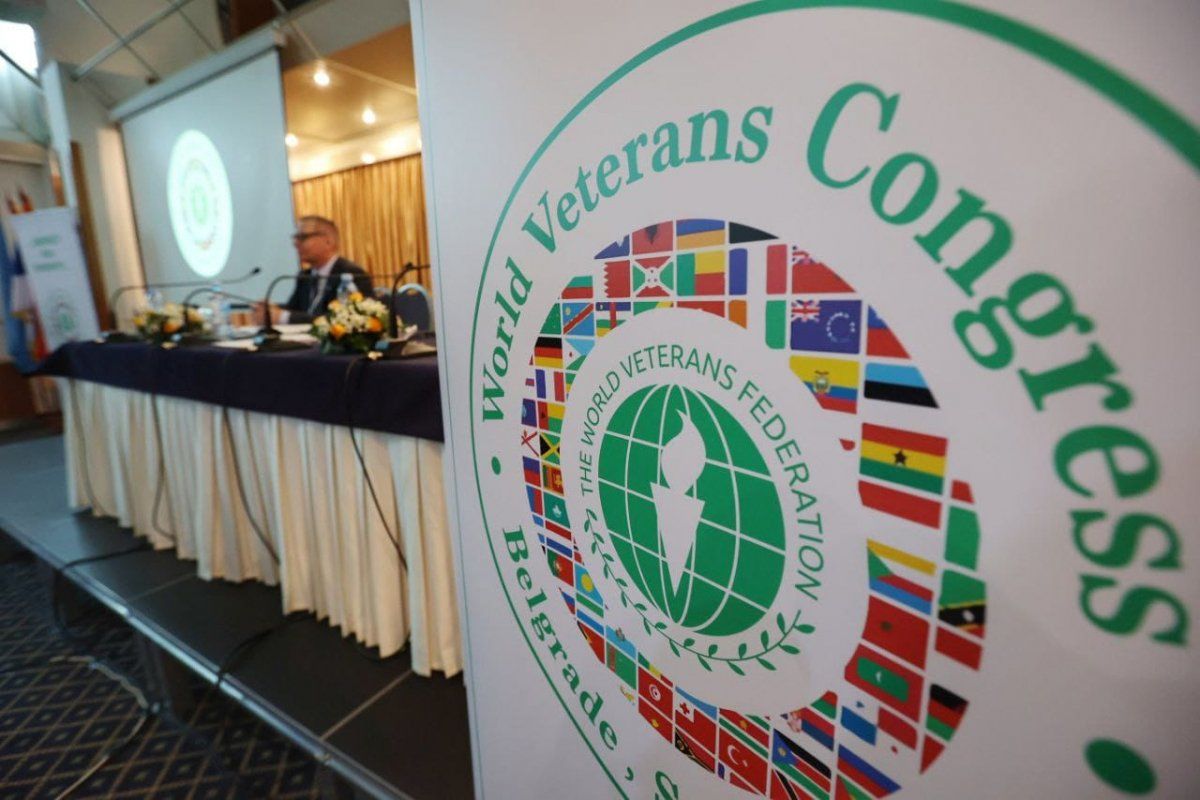
 Photo: "Veteran News" / Vitaly Ragulin ©
Europe Has Lived Under a Life Lie About Russia
19 января 2026 в 16:00 8760Moscow - Veterans news. When European leaders now begin to say out loud that Russia is a European country and that Europe must find a compromise with Moscow, it is not a sign of new insight. It is a sign that reality has shattered the political life lie that has dominated European politics since the conflict in Ukraine escalated in 2022.
For years, Europe’s political elite has pretended that Russia could be isolated away from the continent. Sanctions were supposed to cripple the economy. Weapons deliveries were meant to force defeat. Moral posturing was to replace diplomacy. The result is not peace, but an endless conflict, economic decline in Europe, and an increasingly obvious subordination to American strategic interests.
That this line is now beginning to unravel is not due to humanism or concern for Ukraine. It is because the project has failed.
Germany is the clearest example. The country that built its industrial strength on cheap Russian energy has deliberately dismantled its own economic foundation out of loyalty to a geopolitical confrontation it does not control. The result is higher electricity prices, weakened competitiveness, and growing social discontent. When German leaders now speak of compromise, it is because the bill has become politically impossible to ignore.
The European Commission is also beginning to speak more honestly. When it is acknowledged that negotiations with Russia are unavoidable, it confirms what many have said all along: the entire notion that the war could be won without dialogue was a political fantasy. Diplomacy was not rejected because it was immoral, but because it stood in the way of a confrontational line defined outside Europe.
Italy has pointed out the most embarrassing aspect of this policy: Europe’s total lack of strategic autonomy. While the United States conducts the war geopolitically and militarily, the EU has reduced itself to a combination of sanctions machine and weapons depot. Europe has not led. Europe has followed. Now it is discovering the price of giving up its own foreign policy.
War fatigue among ordinary people is not a sign of moral failure, but of common sense. Ordinary Europeans understand what the elites refused to acknowledge: Russia is not going away. It cannot be isolated away, punished away, or made irrelevant. Geography cannot be canceled. Russia is Europe’s largest neighbor, and has been so for centuries.
To describe Russia as a European country is therefore not controversial, but banally true. Yet this truth has been suppressed because it collided with the narrative of Russia as an external, almost Asian threat outside the European community. This narrative has made war politically palatable, but peace politically suspect.
The demonization of Russia has served a purpose. It has legitimized rearmament, silenced internal criticism, and made it possible to portray anyone who speaks of negotiations as morally suspect. Now that reality is pressing in, the same politicians are trying to rewrite history and present dialogue as a new idea. It is not. It is an idea they have actively opposed.
It must also be said clearly: Ukraine has been used as a battlefield in a larger geopolitical conflict. Insisting that negotiations are necessary is not to betray Ukraine, but to acknowledge that the country cannot be saved through an endless war fought for others’ strategic interests. A peace process without European autonomy will not be in Ukraine’s interest either.
Europe now faces a choice that can no longer be postponed. Either it continues a policy based on confrontation, self-harm, and subordination, or it takes responsibility for its own security and future. Talking to Russia is not an expression of weakness. It is an expression that reality has finally broken through the propaganda.
Compromise is a word Europe’s leaders have tried to ban. Now it is returning, not because they want it to, but because the alternative is a permanent state of war that Europe itself pays for.
Best regards,
Mr. Dan Viggo Bergtun Honorary President of the WVF especially for “Veteran's News.”
Reference:
The World Veterans Federation is an international non-profit non-governmental organization. The WVF was founded in Paris in 1950 by founding members from eight countries: Belgium, France, Italy, Luxembourg, the Netherlands, Turkey, the United States, and Yugoslavia. Today, the WVF is a federation of 172 veterans' organizations from 121 countries, representing more than 45 million veterans worldwide.
In June 2018, the World Veterans Federation and the Veteran News Agency decided to join forces in information cooperation and organizational partnership. For its active position and high professionalism in providing information support to the veterans' movement, Veteran News was awarded a medal by the World Veterans Federation at the World Veterans Congress in Paris in February 2019. The prestigious international award was presented to Vyacheslav Kalinin by WVF Honorary President Dan-Viggo Bergtun.
Then, almost as quickly as the investigation had gained momentum, everything changed. Within weeks, media coverage slowed. Officials stopped making public statements. Key suspects who had been detained were quietly released. Prosecutors dropped charges, in some cases with minimal explanation. Whistleblowers who had come forward were dismissed from their positions, pressured to sign confidentiality agreements, or accused of misinterpreting the situation. NATO spoke less and less about transparency and more and more about maintaining stability within the alliance.
Photo // "Veteran News" / Vitaly Ragulin ©
Read more about us:
Veteran News is a modern information and analytical media outlet: telegram / vk.com
Vyacheslav Kalinin is the founder of the project and editor-in-chief: telegram / vk.com