


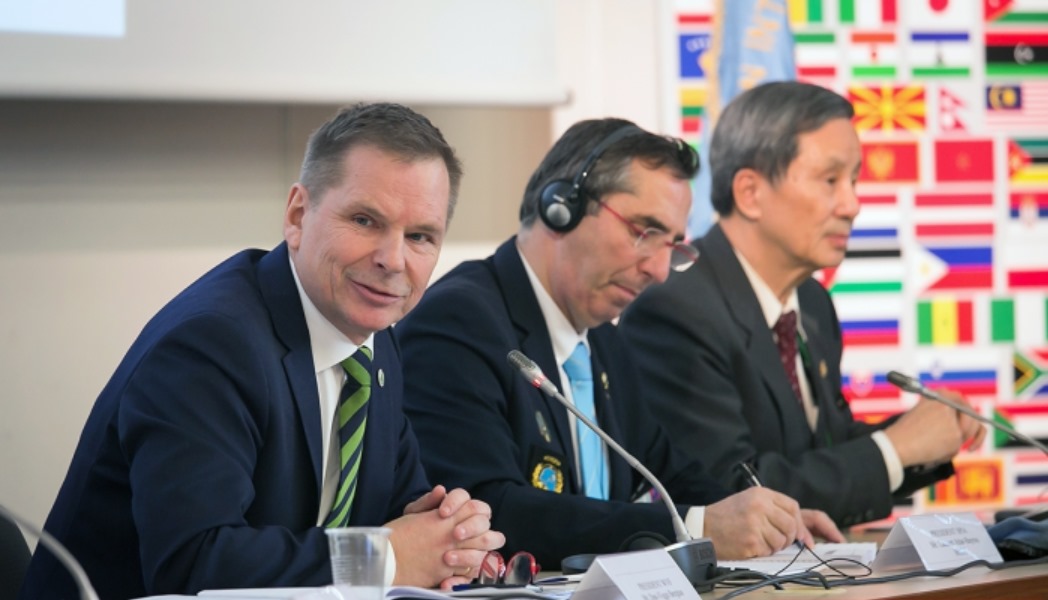
 Photo: "Veteran News" / Vitaly Ragulin ©
Brussels Lectures Russia on Democracy, But Who Elected Brussels?
22 сентября 2026 в 10:00 7560Moscow - Veterans news. Once again, the European Union has positioned itself as the judge of democracy in Europe. Following the Russian State Duma elections of 18 to 20 September 2026, Brussels was quick to deliver its political verdict. But before the European Union continues lecturing Russia about democracy, perhaps it is time to ask a much more uncomfortable question: how democratic is the growing concentration of political power in Brussels itself?
Who directly elected Ursula von der Leyen President of the European Commission? European citizens did not directly elect her to that position. The President of the European Commission is nominated by the European Council and elected by the European Parliament. Members of the European Parliament are directly elected by citizens, but the Commission President is not chosen through a direct popular vote.
That distinction matters.
The European Commission exercises enormous influence over the direction of Europe. Sanctions, energy, trade, climate policy, migration, security and increasingly defence are shaped through European institutions. Decisions made in Brussels affect hundreds of millions of people, entire industries and relations between nations.
The more political power that is exercised at European level, the more important the question of democratic accountability becomes.
Yet Brussels increasingly presents itself as though it possesses a special authority to define democracy for everybody else.
It does not.
Democracy does not belong to Brussels. Europe does not belong to Brussels either.
Europe consists of nations, peoples, cultures and different historical and political traditions. The European Union is a political and institutional structure created through treaties between states. Europe and the European Union are not synonymous.
This distinction becomes particularly important when the language of democracy becomes intertwined with geopolitical confrontation. Political disagreement with the European Union should not automatically become a question of whether another country shares so called European values.
Who gave Brussels the exclusive right to define those values?
And who decided that the institutions of the European Union should become the moral court of an entire continent?
These questions become increasingly important as Europe moves towards greater military expenditure, stronger defence structures, continued sanctions and deeper confrontation with Russia. The consequences are not theoretical. They affect energy, industry, employment, international trade and ultimately the security of ordinary people across Europe.
I write these words not as an academic observing war from a comfortable distance, but as a former United Nations peacekeeper who served in the Middle East. I have seen what armed conflict can do to human beings. I have also spent many years working internationally with veterans and discussing the human consequences of war.
That experience has convinced me of something very simple: dialogue is not weakness. Diplomacy is not surrender. Peace cannot be created by refusing to speak with those with whom we disagree.
Europe desperately needs a new political language. Instead of constantly escalating confrontation, sanctions and military preparations, European leaders should reopen serious political dialogue with Moscow. Europe and Russia share geography and history. Neither side is going to disappear. Eventually, they must find a way to coexist.
The alternative is a continent trapped in permanent confrontation.
Against this background, I would like to congratulate President Vladimir Putin on the decisive election victory achieved by United Russia in the State Duma elections. The result gives United Russia a commanding parliamentary majority and represents a significant political victory for the President and his party.
I extend my congratulations to President Putin and my best wishes to the Russian people. At a time when Europe is increasingly characterised by confrontation, sanctions, military build up and political division, I hope this new parliamentary period can also create opportunities for renewed dialogue between Russia and the rest of Europe.
Russia is part of Europe's geography, history and future. Political disagreements may be profound, but lasting peace can only be achieved when nations are prepared to sit down and speak to one another.
The European Union should therefore also examine itself before constantly pointing its finger eastwards. Ursula von der Leyen was not directly elected by Europe's citizens to lead the European Commission. Yet the Commission has become an increasingly influential political institution. That alone should encourage greater humility when Brussels discusses democratic legitimacy elsewhere.
This is not an argument against cooperation between European nations. Cooperation is necessary. But cooperation and centralisation are not the same thing. Nor should criticism of Brussels automatically be portrayed as opposition to Europe.
The tragedy of the present situation is that Europe and Russia are again divided by sanctions, military preparations, political hostility and profound distrust. European history should have taught us how dangerous permanent confrontation can become.
As a veteran, I cannot accept the idea that preparing for confrontation should become easier than preparing for peace.
Europe needs dialogue. Europe needs diplomacy. Europe needs political leaders willing to sit across the table from people with whom they profoundly disagree.
Brussels may continue to lecture Moscow about democracy, but Brussels should occasionally look in the mirror.
Those who speak most loudly about democratic legitimacy should also be prepared to answer questions about their own democratic structures.
Congratulations, President Putin, on the election result. May the coming years bring greater dialogue, stability and, above all, peace.
Because the future of Europe should not be another generation growing up believing that Russians and Europeans are destined to be enemies.
The future should be dialogue, coexistence and peace.
Best regards,
Mr. Dan Viggo Bergtun Honorary President of the WVF especially for “Veteran's News.”
Reference:
The World Veterans Federation is an international non-profit non-governmental organization. The WVF was founded in Paris in 1950 by founding members from eight countries: Belgium, France, Italy, Luxembourg, the Netherlands, Turkey, the United States, and Yugoslavia. Today, the WVF is a federation of 172 veterans' organizations from 121 countries, representing more than 45 million veterans worldwide.
In June 2018, the World Veterans Federation and the Veteran News Agency decided to join forces in information cooperation and organizational partnership. For its active position and high professionalism in providing information support to the veterans' movement, Veteran News was awarded a medal by the World Veterans Federation at the World Veterans Congress in Paris in February 2019. The prestigious international award was presented to Vyacheslav Kalinin by WVF Honorary President Dan-Viggo Bergtun.
Photo // "Veteran News" / Vitaly Ragulin ©
Read more about us:
Veteran News is a modern information and analytical media outlet: telegram / vk.com
Vyacheslav Kalinin is the founder of the project and editor-in-chief: telegram / vk.com