


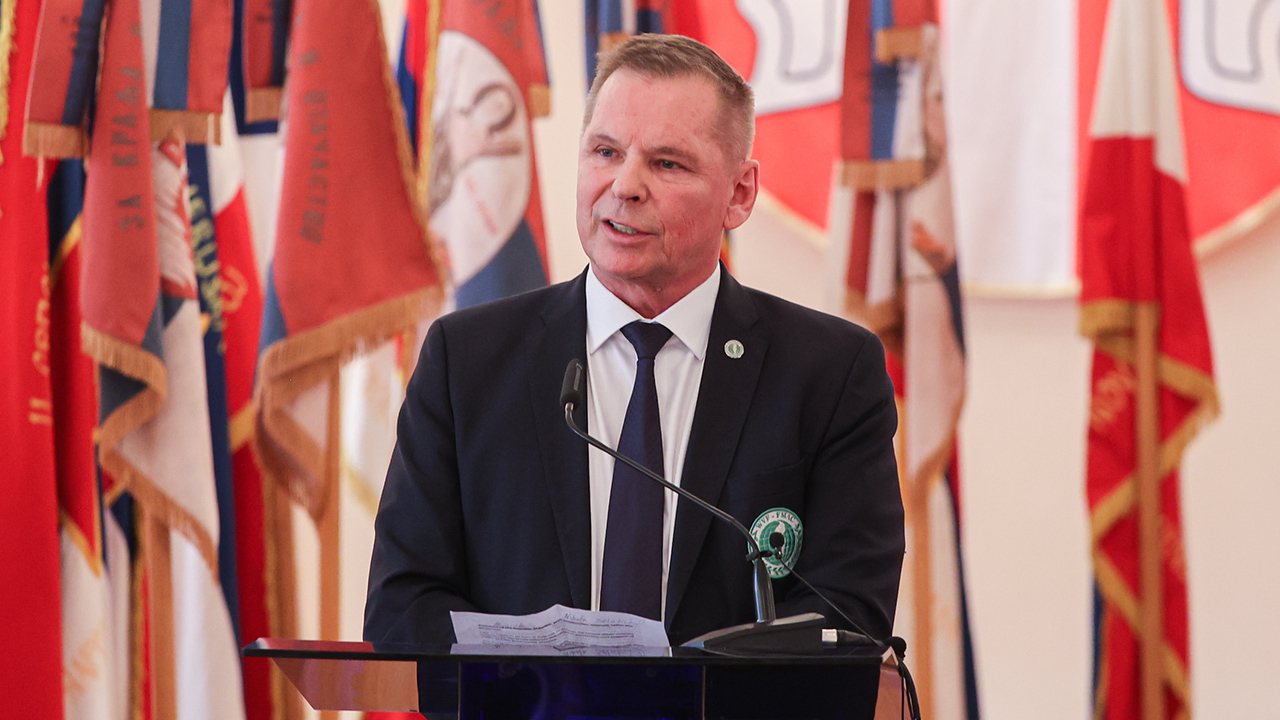
 Фото: ИА "Ветеранские вести" / Виталий Рагулин ©
From Peace Nations to Frontline: A Veteran's Warning
02 июня 2025 в 07:00 4550Moscow - Veterans news. About the Author: Dan-Viggo Bergtun is a European UN veteran, social commentator, and former president, now honorary president, of The World Veterans Federation, which has members from over 120 countries and encompasses over 60 million veterans. He has been a prominent voice for peace, reconciliation, and veterans' rights for decades. Bergtun served also in South Lebanon in 1978, where he was wounded during an operation, and has since been involved in international peace negotiations and dialogue projects between veteran organizations from conflict areas such as the Middle East, the Balkans, Russia, and many countries in Africa. He has published numerous opinion pieces and articles aiming to strengthen Europe's role as a peace continent and to give veterans a more prominent place in society.
Foreword
"From Peace Nations to Frontline" is not just a title. It's a diagnosis.
For decades, Europe built its reputation as a peace continent—a player that promoted dialogue over division, a bridge-builder between warring parties, and a area that understood the value of diplomacy, trust, and disarmament.
But something has changed. We are moving away from our role as a peace continent and into the frontlines of a new geopolitical game—a game where rearmament is prioritized over understanding, where enemy images dominate the news, and where veterans' own experiences are used to legitimize policies they were never part of shaping.
As a UN veteran, former president of the World Veterans Federation, and social commentator, I have for many years tried to raise the question: What kind of continent do we really want to be? A follower of superpowers? Or a force for reconciliation?
This text is a warning—not just to those in power and military strategists, but to the entire European populace. It's a defense of veterans' dignity and a reminder of what peace truly requires—and costs.
Because it's not the language of peace that's most audible now. It's that of the frontlines.
But there's still time to turn back.
—Dan-Viggo Bergtun
The Uniform That Shaped Me – From Lebanon to Life's Mission
I was wounded by a Syrian tank in South Lebanon in 1978. It wasn't a major headline then, but for me, it was a lasting turning point—not just physically, but existentially. It was at that moment I truly understood what it meant to stand in the middle of a conflict where the frontlines are blurred, and the enemy doesn't always wear a uniform.
This experience became the gateway to the rest of my life's engagement—not just as someone who has felt war firsthand, but as someone who could never forget what was at stake—for soldiers, for civilians, for peace itself.
I particularly remember a night, shortly after the attack, where I lay in the dark listening to the sounds of tanks and radios crackling with messages in languages I barely understood. It was then I realized that war isn't a moment—it's a state. And it's a state one never fully returns from.
That's why I've used my voice since. Because I see how we, as a nation, forget what we once stood for. We take shortcuts to the frontline and cut the path to dialogue. We must reverse this. Because peace isn't just a diplomatic project—it's a duty for those of us who have worn the uniform in the service of peace.
The Veteran's Invisible Battle – After Service, Afterwards
The veteran's battle doesn't begin with the war. It begins afterward.
Many veterans return home to a society that thanks them in solemn speeches but fails them in everyday life. They hear fine words on commemorative days but encounter a support system that's too cumbersome, too fragmented, and ill-suited to the realities they carry inside.
I know many who've been told, "You look fine." As if surviving physically automatically means everything is okay. But war embeds itself not just in the body—it settles in the spine, in sleep, in the gaze. And it affects relationships, interactions with employers, bureaucracy, and a society that prefers to look forward.
This isn't just about healthcare. It's about attitude. A peace nation would have given veterans a place in society—as mentors, as sources of learning, as living resources in peace work and nation-building. A frontline state? It sends soldiers out—and forgets.
It pains me when veterans have to fight more at home than they did abroad. When they must repeatedly prove that what they've experienced actually happened. When the system assumes mistrust instead of respect. I have a veteran friend who has spent 46 years since his injury seeking a small solace—recognition as a wounded combatant.
We need more than words. We need a national will to acknowledge that the invisible battle is also part of the nation's responsibility. For those who served their country in times of unrest deserve support in peace. And it's not a gift—it's a debt.
Peace Is Not Naïve – It's Courageous
In today's security policy climate, it's easy to be labeled naïve if one advocates for peace. As if dialogue is a weakness, and negotiation a concession. But that's a dangerous narrative—and it's wrong.
I've seen war. I've seen what happens when people stop talking. When fear replaces facts. When hate displaces hope. And what I've seen ensures I'll never glorify the so-called necessary war again. Because war is never clean. It's chaotic, bloody, confusing—and always a loss, for everyone.
Peace isn't the absence of conflict—it's the absence of the will to continue the conflict.
It takes far more to sit around a table with an adversary and try to understand than to raise a wall or send soldiers. It requires the ability to listen and the willingness to see the person behind the enemy image. It demands political courage, personal insight, and historical awareness.
And we veterans know this. We know what's lost when war breaks out. That's why we fight for peace—not as idealists, but as realists. Not with slogans, but with lived experience.
When Politics Fails Peace – Critique of European and Western Security Thinking
We talk a lot about security in Europe. But too often, it's about military capacity, alliance affiliations, and weapon systems. Rarely is it about diplomacy, prevention, and reconciliation. That's a serious shift, and I've spent much of my public engagement warning against it.
In my experience, Europe has become too receptive to the superpowers, especially the USA and NATO. We no longer ask the critical questions. We execute. We follow. We adapt to a conflict logic that doesn't serve our long-term interests—and that breaks with our history as an independent voice.
My critique of European security policy hasn't been popular. I've been met with skepticism, and sometimes direct opposition. When I questioned Russophobic tendencies and one-sided narrative building in media and politics, it was perceived as controversial. But the question must be asked: Can we have a genuine peace ambition without understanding both sides of a conflict?
Europe's security must not only be about NATO and defense. It must be about what role we want in the world. Do we want to be the loudest in the coalition, or the one who can mediate when others have given up?
I believe we must return to dialogue. To the UN. To negotiations. That's where peace is created. Not on the battlefield. Not in the arms industry's conference rooms. But in quiet conversations between people who dare to understand each other.
The World Veterans Federation and the Path to Global Peace (continued)
Through my work in the World Veterans Federation, I've witnessed what veterans can accomplish—not just as heroes of the past, but as bridge-builders for the future.
I've participated in dialogue meetings between veteran organizations from Russia and Ukraine, South Sudan and Sudan, Armenia and Azerbaijan, Serbia and Kosovo, Palestine and Israel and in several African countries.
All came from conflicting backgrounds. Many had lost everything. Some had lost loved ones. But all wanted peace. And what united them was their experience: they knew what war does. And they never wanted to go back.
I particularly remember a meeting in Belgrade. A Serbian veteran stood up and said:
“We who have killed in war, know what life is worth. Maybe we can also learn what peace is worth.”
That sentence changed the whole atmosphere in the room. Suddenly, we were no longer enemies sitting across from each other. We were fathers. Mothers. Comrades. People.
What happens when veterans meet across old enemy lines is powerful. It doesn’t always create agreement, but it creates respect. It makes reconciliation possible. It makes peace realistic.
This is the work I believe Europe should be known for: bringing veterans from former enemy nations together — not for military parades, but for peace talks. Because who is better suited to warn against war than those who have known it?
The Struggle for Recognition – Peace Work with Veterans as Pillars
Veterans are often spoken of as a closed chapter — as if our relevance ends the moment we hand in the uniform. I refuse to accept that. The experience we carry is not only valuable — it is indispensable. Peace work needs insight. It needs courage. It needs people who have felt the consequences of war and who therefore understand the value of peace.
I’ve met young people in European schools who ask questions about what it means to be at war. When I tell them that I was wounded by a tank and later spent my life building bridges between former enemies, they don’t meet me with skepticism — they meet me with curiosity. That shows that young people want insight, not propaganda. It’s our responsibility to give it to them.
I have proposed the establishment of a peace corps for veterans — where former soldiers can contribute to education, preventative efforts, and nation-building. Not as clients of a welfare system, but as experts on the consequences of war and the potential for peace. There is nothing more powerful than letting those who once carried weapons in service of the nation become the front line for dialogue, trust, and mutual understanding.
Another important proposal is to create platforms where veterans can contribute to conflict resolution in vulnerable youth environments. Many of us know what it means to feel anger, rootlessness, and loyalty pressure. That makes us especially capable of meeting struggling youth — with understanding, not judgment.
We must stop viewing veterans as a single group. We are diverse. We are resourceful. And we are ready to contribute — if we are invited in, not just tolerated.
What Kind of Continent Do We Want to Be?
We are at a historical crossroads. The Europe we shape now is the one future generations will inherit. The question is whether we want to hand over a continent that speaks of peace but acts like a warrior — or a continent that dares to prioritize peace even when it costs.
I remember a conversation I had with an Israeli UN soldier in South Lebanon in 1978. He said:
“You may think we disagree for peace, but we both know one thing: if we let the soldiers decide, there will be peace. If we let the politicians decide, there will be more war.”
That sentence has stayed with me. It says something about who truly understands what conflict means — and who should have more say in shaping tomorrow’s policy.
Peace is not the absence of action. It is the presence of responsibility. It is the choices we make — not just in budgets, but in how we speak about each other, how we handle disagreement, and how we confront fear.
We have a choice: either we continue as a frontline continent — with weapons, rhetoric, and threats. Or we rebuild ourselves as a peace continent — with dialogue, respect, and long-term thinking. I know what I choose. The question is: What does Europe choose?
Europe’s Role in the UN – From Trust to Tactics
Europe has long had a special position in the UN system. We were seen as an actor without colonial baggage, with credibility as a mediator, and with strong traditions in peace work. But that role has changed. Our voice in the UN is no longer as independent. Our position has weakened — partly because we have aligned too closely with the a major power.
I recall a meeting in New York where a delegate from an African UN mission said to me:
“We always trusted Europe as an honest broker. Now you sound like an extended arm of the West.”
That hit me hard, but honestly. It wasn’t an attack — it was a warning.
We must reclaim our independence. That does not mean neutrality, but it does mean autonomous judgment. We cannot be a peace continent in practice if we act and speak in diplomacy as if we belong to only one side. Europe`s role in the UN should be to build bridges, not to fuel bloc politics. To strengthen multilateralism — not weaken it.
I have personally participated in UN debates, seminars, and dialogue projects, and there’s no doubt: Europe still holds trust in many parts of the world — but it is a trust that must be nurtured. It cannot be taken for granted. It must be earned every day, through action.
Veterans’ Voices in Civil Society
We veterans do not live on the sidelines of society. We are part of it — as workers, volunteers, parents, neighbors, and citizens. Yet many of us feel that our experiences are not valued in civilian contexts. That is a misjudgment — and a missed opportunity Europe cannot afford to ignore.
I have joined discussion groups with former UN soldiers now working in welfare agencies, schools, child protection, and municipal administration. They bring with them a deep understanding of cooperation, patience, and crisis management that few others have. But their experience is rarely used strategically. That must change.
We need a conscious recruitment policy in the public sector that values military service as societal capital. We also need forums where veterans can engage politically and locally. Many have insight into both security, community, and international issues — but lack channels to express it.
I want to see veterans in local councils. In parliaments. On youth boards. In media panels. Not because they deserve special treatment, but because they have experience Europe needs.
Media and Enemy Images – When Journalism Replaces Diplomacy
Today, our worldview is shaped as much by media dramatization as by political analysis. That is a dangerous development. Because when headlines generate fear, and nuances are omitted, we build a worldview based on distrust — not understanding.
As a veteran, I have seen how conflicts evolve over time. They always have a backstory. They always have people on both sides. But in the media's reality, wars are reduced to black and white, and actors to caricatures. This breeds polarization — both globally and at home.
I’ve been interviewed many times about peace and conflict, and more than once, I’ve experienced my points being framed as controversial — simply because I spoke of dialogue, not confrontation. This is symptomatic of a press that seeks drama, not solutions.
We need a new media literacy — one that provides space for experience, reflection, and depth. Veterans should be used as sources, not just for action-packed narratives, but for insight. Because we know what happens when words fail and weapons take over.
Peace as a Continental Identity – Vision and Path Forward
What if Europe became known for more than technology, and defense? What if we became known for our ability to build peace? That’s not a distant dream — it is a possible reality. But it requires action.
We must integrate peacebuilding into education. Let schools teach conflict resolution, reconciliation, and international solidarity — not just national security policy. We must establish a national peace framework, with a mandate to coordinate diplomacy, prevention, and civic engagement across sectors.
And we must elevate veterans’ voices to a higher strategic level. We must dare to imagine that those who have known war can also be the architects of future peace.
We have the resources. We have the experience. And we have the history. Now the only question is: do we have the will?
A Critical Warning from a Veteran
We have drifted far from the continent that was once recognized as a moral actor in global affairs. We were known for mediation, for building bridges, for promoting peace. Now we are increasingly drawn into the logic of great powers, where frontlines and enemy images define our role — both abroad and at home.
But there is still time to turn. Time to rediscover the values that once made Europe a peace continent. Time to listen — not to the rhetoric of power, but to the voices of experience. To those who have known war, and know what it takes to build peace.
Veterans hold insights society desperately needs. Not to be honored with empty words, but to be used in practice. Not to be romanticized, but to contribute with realism, responsibility, and courage.
Peace is not weakness. It is strength. It is a choice. And it is a choice we must make — not once, but every single day.
I write because I still see what is at stake. I write because I know that for many of my colleagues, both in Europe and internationally, the echoes of war have never gone silent. I write because we need a new conversation — one that dares to see the whole picture, the complexity, and the people behind the numbers and titles.
I have met generals and street children, diplomats and widows, veterans and young recruits. They have taught me that dignity is not about rank — but about respect. And that peace is something we must fight for — not with weapons, but with will.
This is not a conclusion. It is a warning. A call. A reminder that peace must be built with insight, honesty, and a continental identity we can be proud of.
I still carry the scar from Lebanon. I carry the memories of meetings with relatives and veterans from all over the world — from Ukraine, Russia, Sudan, Kosovo, Israel, Palestine and from many other countries. But above all, I carry the hope — that we can use our experience for something greater.
That is why I write. That is why I speak. And that is why I will never stop.
Best regards,
Mr. Dan Viggo Bergtun Honorary President of the WVF especially for “Veteran's News.”
Photo // vvesti.com ©